Core Searching series: Core Searching Paintings - kim heejo

Core Searching series: Core Searching Paintings


A Body of Work Exploring Bodily Movement and Performative Process through the Fundamental Colors and Geometric Forms of BYR


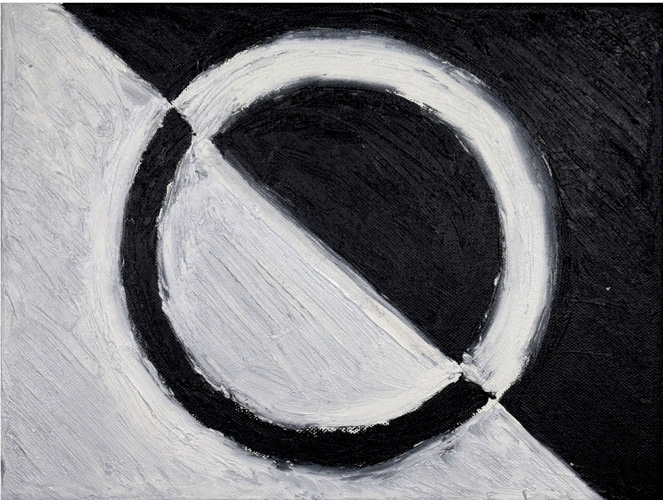
Core Searching Paintings is a body of paintings that explores bodily movement and performative process through the fundamental formal language of BYR: the color system of Blue, Yellow, and Red, and the geometric structures of the square, triangle, and circle. Using oil stick as a direct and material medium, this series examines how minimal colors and forms are generated, transformed, and brought into relation on the pictorial surface. Here, Blue, Yellow, and Red are not merely chromatic choices, but primary units that constitute the underlying order of the BYR structure, while the square, triangle, and circle function not simply as geometric figures, but as essential forms through which pictorial construction and expansion become possible.
 
At the center of this work is not the presentation of a completed image, but an effort to return to the very point of origin of painting through the most basic colors and forms. By repeatedly engaging the restricted palette of Blue, Yellow, and Red, together with the minimal formal elements of the square, triangle, and circle, the artist investigates how painting begins and how it forms structure. Core Searching Paintings, therefore, is less a body of work concerned with depicting objects or conveying narrative than a process through which the fundamental conditions of form are reexamined through bodily action.
 
In this series, color functions not as sensory decoration, but as a structural language. Blue, Yellow, and Red operate as independent colors while simultaneously forming a unified primary system that generates relations of tension and balance, separation and connection within the image. Rather than aiming toward an infinite world of chromatic variation through mixture and diffusion, these colors are used to reveal the most elementary differences and orders. This restriction does not signify reduction in the negative sense, but a means of clarifying structure and returning painting to a more essential formal condition.
 
Form operates in a similar way. The square, triangle, and circle do not appear here as fixed or completed images, but as structures provisionally formed and dissolved through line, plane, pressure, and movement. At times, only a fragment of a circle is revealed; at others, straight and curved lines intersect, presenting a state prior to the full emergence of geometric form. In some works, even a single band or line is enough to suggest triangular directionality, circular curvature, or the bounded order of the square. In this way, form is not treated as a stable result, but as a process of becoming, and that process itself is brought to the foreground as one of the essential conditions of painting.
 
The medium of oil stick plays a decisive role in shaping the character of this work. As a material that bypasses the indirect mediation of brush and liquid paint, oil stick transfers the pressure and movement of the hand directly onto the surface, making both the immediacy of action and the resistance of matter visible at once. Lines are not smoothly refined, but pushed, interrupted, layered, and at times dragged across the surface. The pictorial field thus becomes not a flat arrangement of colors, but a material arena in which bodily movement, pressure, speed, and rhythm accumulate. In particular, the traces of Blue, Yellow, and Red set against a dark ground do not simply assert their chromatic identity, but evoke a process in which structure is searched for and gradually brought into visibility out of darkness.
 
Within this work, the body is not merely the agent that manipulates a tool, but a direct formative principle that shapes the image. A single line changes in thickness, density, and intensity according to the speed and pressure of the hand, and even the curvature of a circle or the direction of a band is subtly altered by bodily movement. The traces left on the surface are therefore both the result of abstract form and the record of concrete physical action. In this sense, Core Searching Paintings is not a mode of painting grounded solely in mental conception, but a bodily painting through which the structure of form is discovered and tested through movement.
 
Performativity is one of the central conditions of the series. Here, performance does not simply refer to repeated movement, but to the ongoing process of accumulating subtle differences and transformations through the repeated engagement of the same limited elements. The recurrence of Blue, Yellow, and Red, the reappearance of circles and lines, and the contrast between dark ground and luminous trace all give the surface the character of a sustained and almost ritualized practice. Yet this repetition is not mechanical reproduction. It is a performative act in which slightly different structures emerge each time in response to changing bodily conditions and perceptual states. The work therefore does not present a finished geometry, but reveals the accumulation of time through which geometric order is physically searched for and continuously generated.
 
The simplicity of form and the expansion of structure are also defining features of this series. Although the work employs an extremely limited palette and only the most basic geometric forms, these minimal elements generate rich visual rhythms and spatial tensions through repetition, layering, division, and combination. A circle does not remain a closed shape, but produces relations between interior and exterior; a single line establishes direction and division; the juxtaposition of three colors organizes movement across the surface. In this way, simple elements enter into relation with one another to produce a complex formal order, and the work demonstrates an attempt to realize the greatest structural intensity through the most reduced visual language.
 
Above all, Core Searching Paintings reasserts the act of painting itself as a fundamental question of painting. Here, painting is not a means of representing the external world, but a structural event in which color and form, body and time, repetition and trace intersect within a single surface. The meaning of the work lies not only in what is depicted, but in the bodily practice and formal investigation through which the image comes into being. In this respect, the series may be understood as a form of painting that carries a performative dimension, in which the final image and the time of action that made it possible remain inseparable.
 
Ultimately, Core Searching Paintings can be understood as a body of work that reexamines the fundamental structure of painting through the bodily and performative dimensions of the basic BYR colors—Blue, Yellow, and Red—and the most elementary geometric forms of the square, triangle, and circle. The directness of oil stick as a medium makes this investigation materially immediate, while the traces of line and color left on the surface record the very process through which form comes into being. The series is therefore not simply a body of abstract paintings, but a structural inquiry into the point of origin and generative principles of painting through the use of basic color and basic form.


What is 'Schematic Medium'?


‘Schematic Medium’ is the core methodology penetrating my artistic world. It is a structure of thinking that does not seek to reproduce the essence of the world, but rather to model how the world operates. This term is defined on two levels

Schematic Chart


The left sector of the chart contains a deep exploration into how I dissect and perceive the source of life and existence. Core concepts like 'Origin', 'Universe', 'Nature', and 'Chaos' are interwoven with the physical dimensions of 'Time' and 'Space.' This reveals that I perceive the world not as a mere phenomenon, but by deconstructing it into fundamental forces and orders. Crucially, the Holon philosophy offers an integrated perspective, showing that every entity is both 'the whole and the part', forming the core pillar of my ontological thought. This sector is the solid foundation of my artistic contemplation and the very manner in which I perceive the cosmos and the self.
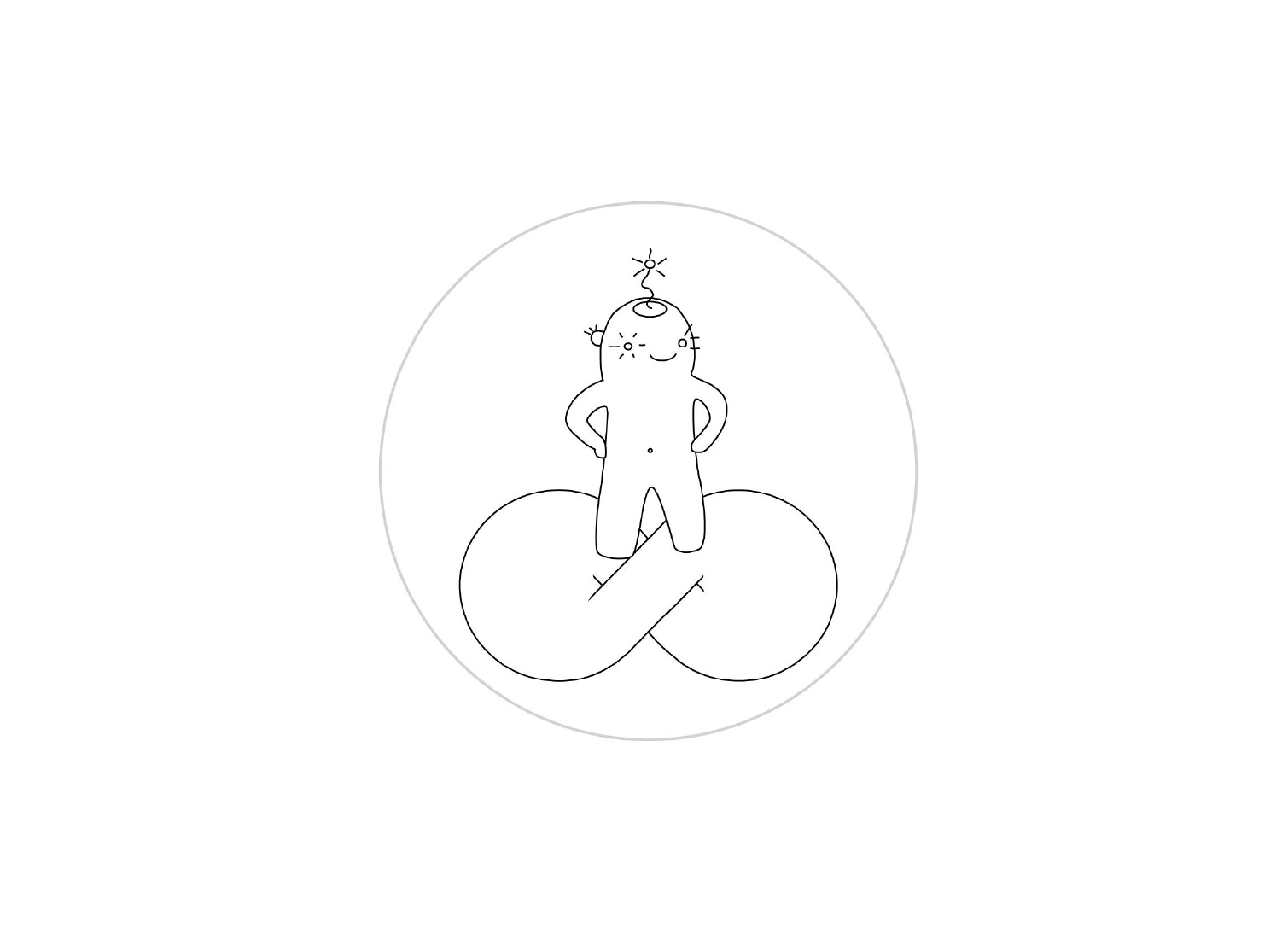
Featured Characters


In the Schematic Chart, my emanated self, RD (Revolutionary Debris), appears alongside other characters. These characters show how my mind and artistic world are structured, and guide viewers to explore my world with enjoyment. Each character goes beyond being a simple symbol and carries the operating principles of the Schematic Medium and hints about forthcoming works. Through this, viewers do not merely appreciate my work but pre-experience another narrative and the possibility of expansion. In the end, this chart is a map that reflects a dimension we do not see in everyday life. Through it I clarify the way I understand and express the world and offer viewers a new visual and philosophical experience. I wish to share not only simple artistic expression but deep thinking and an original perspective.
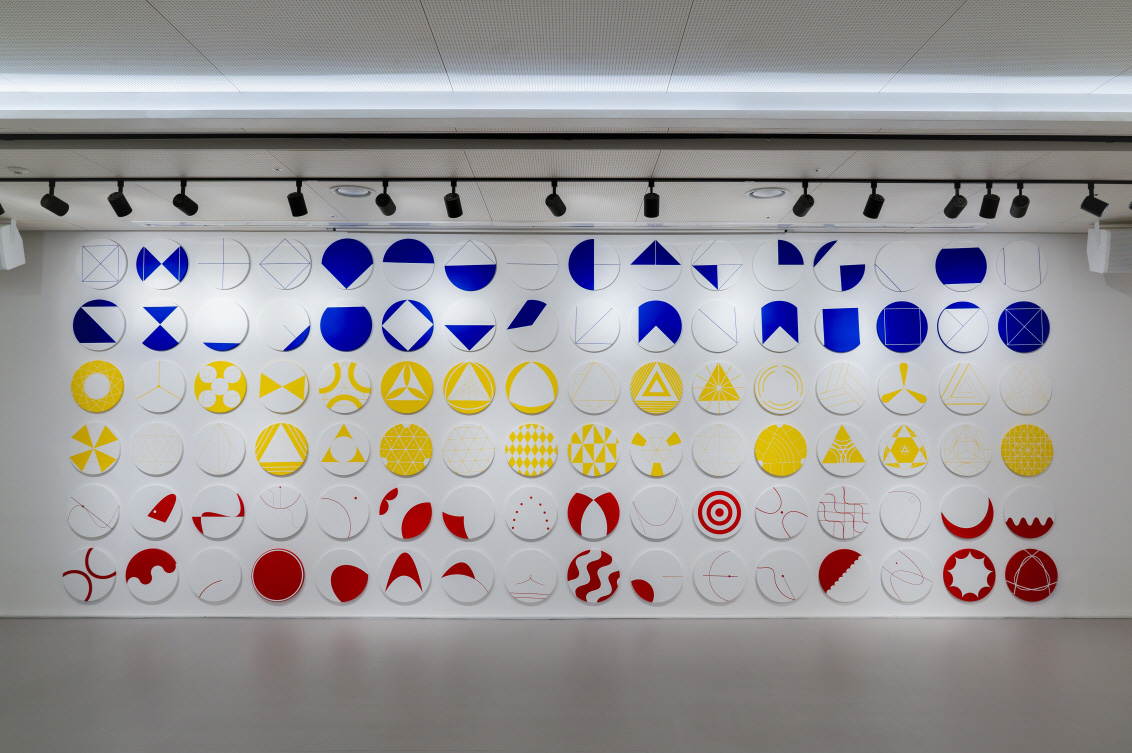
BYR 99 Prime Elements


BYR 99 Prime Elements constitutes the most fundamental structural framework of Kim Heejo’s visual language. The series establishes the minimal unit of form through ninety‑nine elements—thirty‑three each of Blue, Yellow, and Red. Each element carries a specific formal code: Blue (square / human), Yellow (triangle / nature), and Red (circle / cosmos), and the relationships among these three elements generate the artist’s visual system.
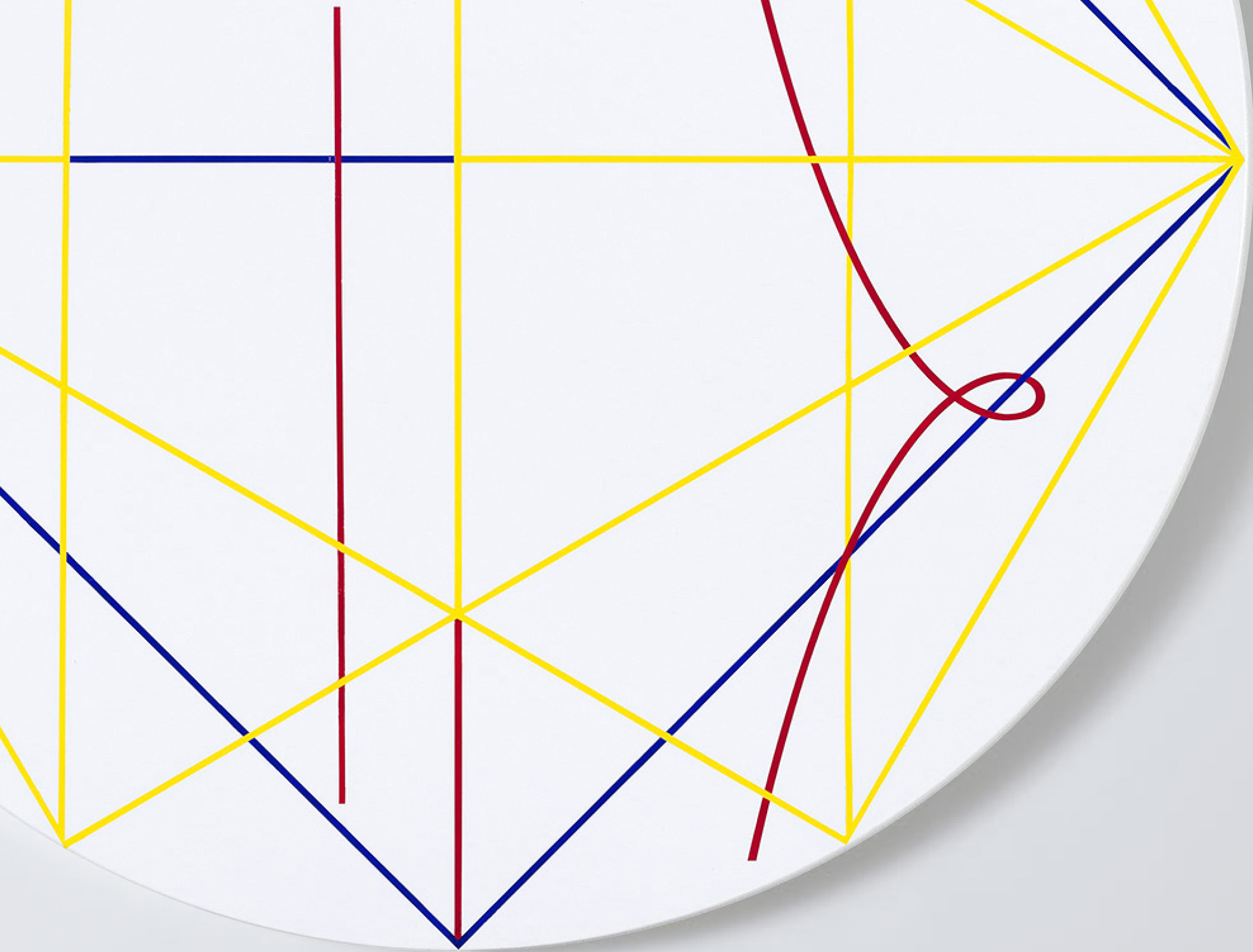
BYR Organic Schemata


BYR Organic Schemata develops from the structure of BYR Prime Elements and demonstrates the organic expansion of the formal system. Through the combination and variation of the basic elements, new configurations of form and structure emerge. The series moves beyond simple geometric units to explore a more fluid and organic visual order.
BYR Quad Origin


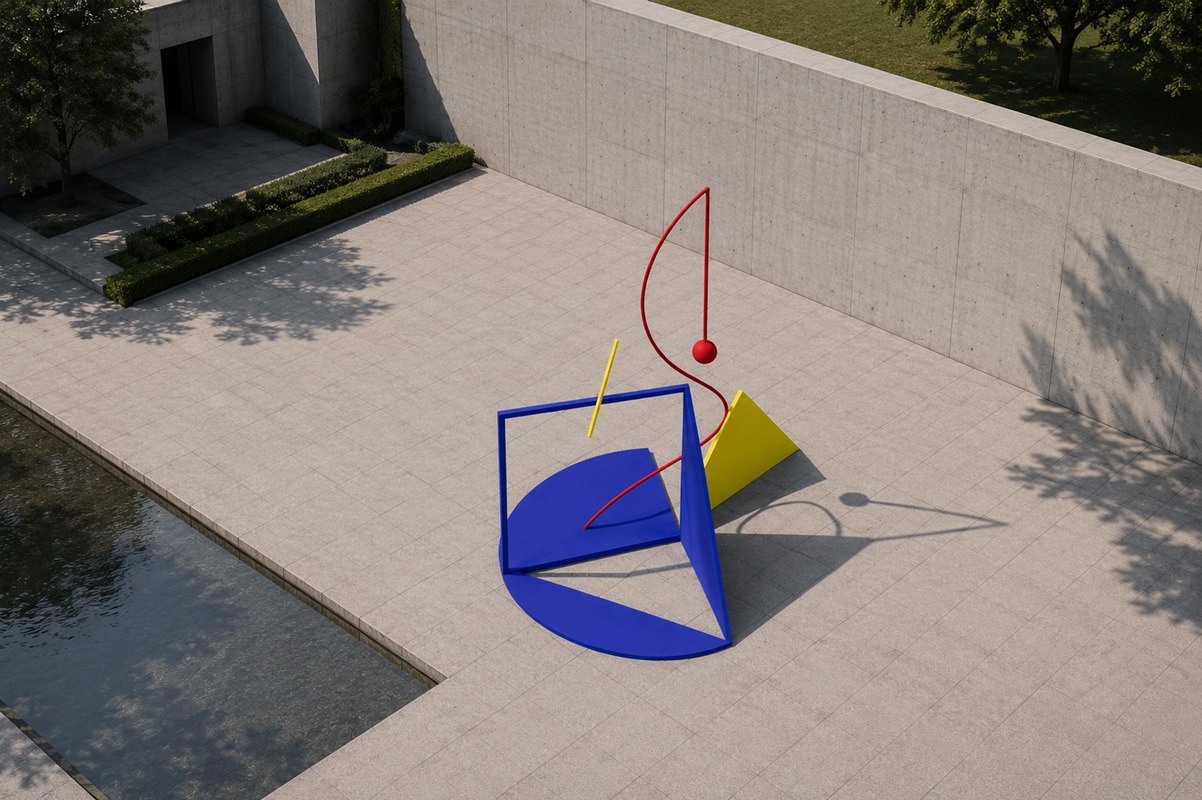
BYR Quad Origin investigates the generative principles of form by reducing the fundamental elements of the BYR system into a geometric structure. Within the relationships between basic forms and colors, the works examine structure, balance, and tension. Through minimal compositions, the series reveals the structural foundation of the BYR visual language while allowing diverse formal variations.

Tri Form Series


The Tri Form Series rearticulates the conceptual structure of BYR Prime Elements as a unified system. Whereas Blue (Gyeok), Yellow (Hyeong), and Red (Gong) were previously presented as independent formative principles, here they are reconfigured to operate simultaneously within a single, integrated structure.
Core Searching series: ‘Semi-Circle & No.9’ Drawing Series


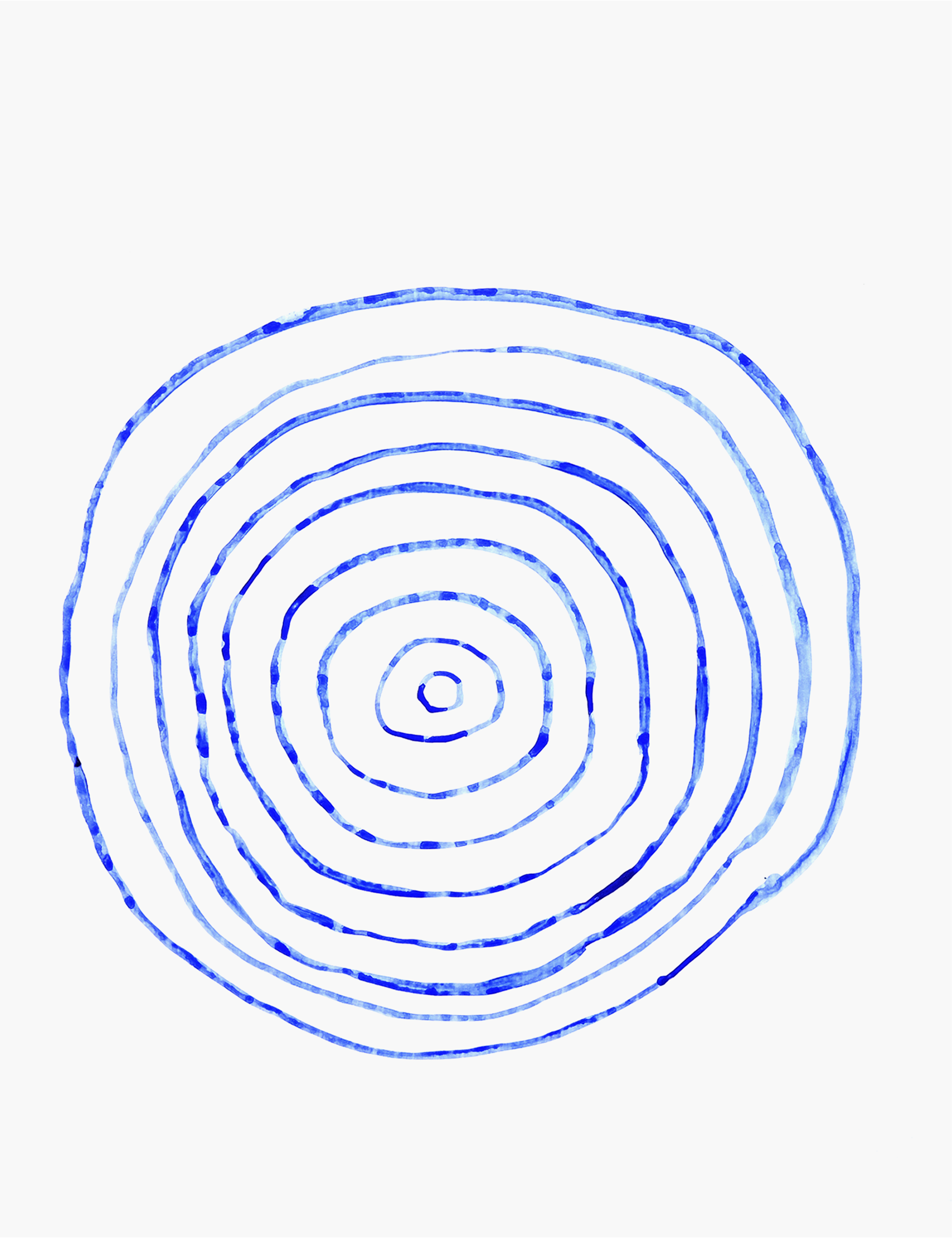
Core-Searching Drawings are early works that investigate the fundamental structure of the artist’s visual language. Through repeated variations of simple forms and signs, the drawings explore the process through which conceptual ideas transform into formal structures. These drawings mark the starting point of a visual system that later expands into painting and object-based works.
Core Searching series: Core Searching Paintings


Core Searching Paintings is a body of paintings that explores bodily movement and performative process through the fundamental formal language of BYR: the color system of Blue, Yellow, and Red, and the geometric structures of the square, triangle, and circle.
Core Searching series: Color Layered Line Drawing Series


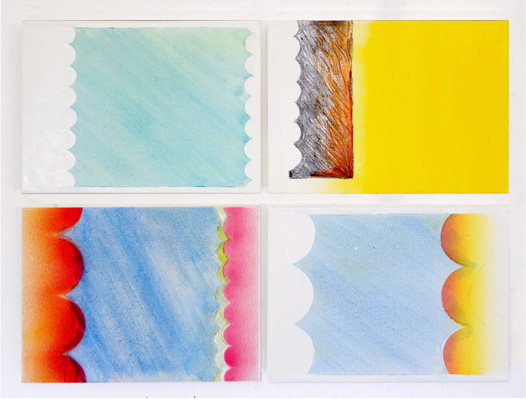
“Color-Layered Line” Drawing Series is a body of work in which colored lines, generated through the movement of the artist’s hand across a measured distance, are layered and accumulated on the surface to form fundamental structures and formal relationships centered on the semicircle.