Schematic Chart
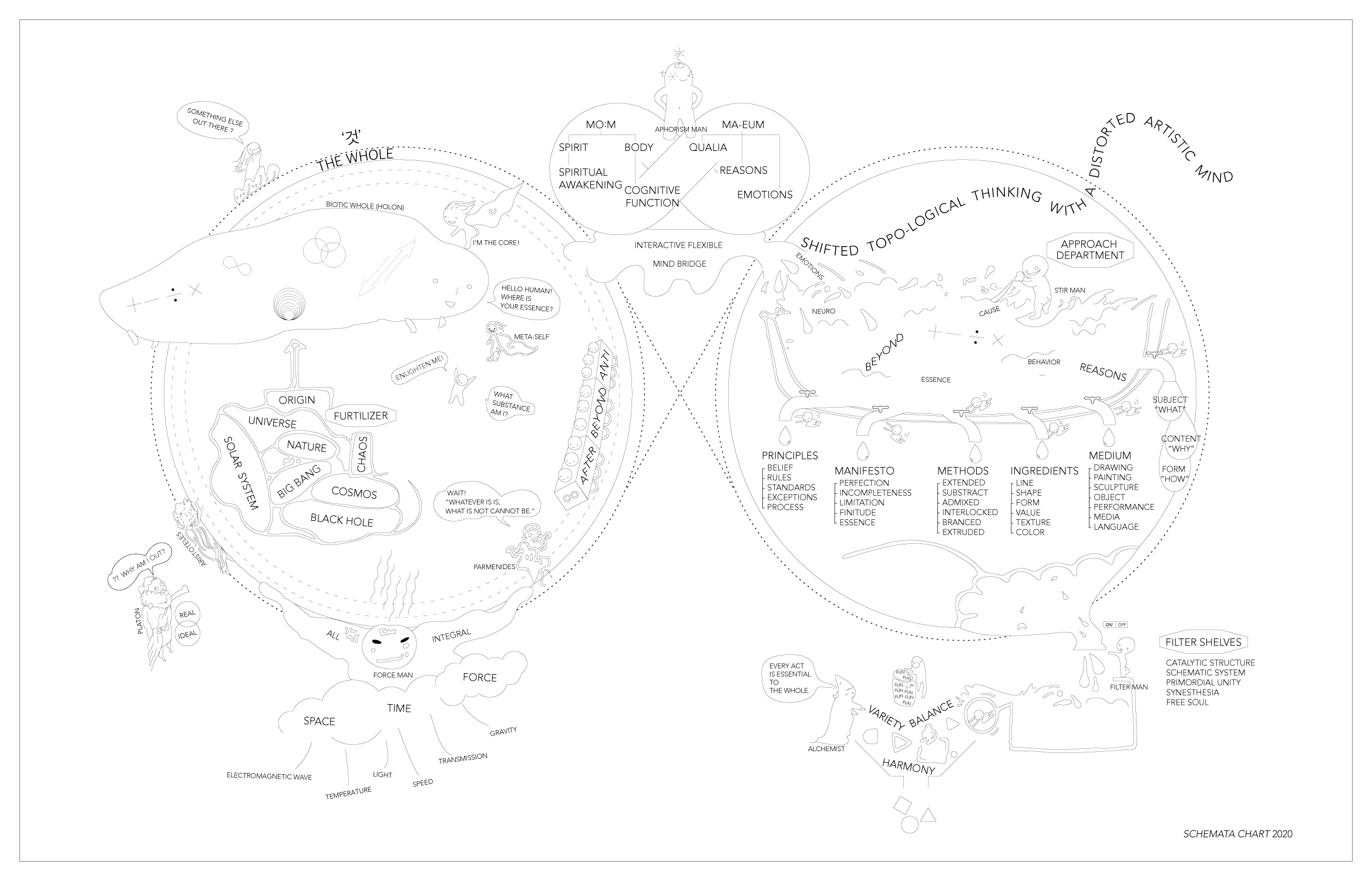
A Holistic Diagram Integrating the Structures of Ontological Perception and Artistic Generation
Schemata Chart is a diagram that condenses the entire structure of thought and the principles of artistic generation governing Heejo Kim’s overall work into a single visual system. This chart is not merely an idea map or a set of working notes, but is closer to a structural diagram that systematically organizes, step by step, how the modes of perceiving the world and existence are converted into artistic language and form. In other words, it is a work that visually presents the fact that ontological questions about life and formative practices in art operate within a single, continuous system.
The left region of the chart demonstrates the cognitive structure through which the origins of existence and the universe are contemplated. At the very center lies the ‘Origin,’ around which concepts such as ‘Universe,’ ‘Nature,’ ‘Big Bang,’ ‘Cosmos,’ ‘Black Hole,’ and ‘Chaos’ are intricately intertwined and arranged. This reveals an understanding of the world not as a single fixed order, but as a complex structure where emergence and dissolution, order and chaos, and expansion and condensation operate simultaneously. This region functions not as a mere statement of a worldview, but as the primordial field from which subsequent artistic thought originates.
‘The Whole’ and ‘Biotic Whole (Holon)’ are presented as overarching concepts encompassing this left-side structure. Here, the ‘Holon’ reflects an integrative perception of existence—where every entity is a whole while simultaneously being a part. Individual existence is not isolated as an independent unit but forms its own structure while belonging to a larger order. Such a perspective shows that Heejo Kim’s work is oriented toward grasping existence within the relationship between the whole and its parts, rather than dealing fragmentarily with individual figures or phenomena. Therefore, the left region can be understood not as mere cosmological imagination, but as the cognitive foundation for structurally perceiving the world.
At the bottom of this left region, the structures of ‘Time’ and ‘Space,’ along with ‘Force’ and ‘Integral,’ are positioned. Time and space are not presented merely as physical conditions surrounding existence, but are connected as a field of force along with elements such as light, velocity, gravity, transmission, and electromagnetic waves. This is a method of perceiving existence as a combination of conditions that are constantly operating and transforming, rather than in a static state. In other words, the left side of the chart presents the fundamental conditions constituting existence as an integrated layer, without separating metaphysical concepts from physical dimensions.
In the upper center, ‘MO:M’ and ‘MA-EUM’ are situated, with the ‘Aphorism Man’ positioned between them. ‘MO:M’ consists of Spirit, Spiritual Awakening, Body, and Cognitive Function, while ‘MA-EUM’ is composed of Qualia, Reasons, and Emotions. This demonstrates that spirit, body, sensation, perception, reason, and emotion are not separated functions but rather a complex structure within the human interior where they intersect with one another. The mechanism connecting these two is precisely the ‘Interactive Flexible Mind Bridge.’ This bridge is not a mere passage between ontological thought and artistic practice, but operates as a core transition zone where the perception of the universe and the self shifts into art through the mental and cognitive operations within the human being.
The right region shows the process by which this cognitive structure is converted into the principles of artistic generation. This space is organized under the phrase “Shifted Topo-logical Thinking with a Distorted Artistic Mind,” which implies that the essence captured from the world is not reproduced as it is, but is transformed into a new artistic language through topological shifts, distortions, displacements, and rearrangements. What is crucial here is that distortion is not mere deformation or an expressive peculiarity, but an active cognitive apparatus for artistically reconstituting the essence of existence.
Within the right region, ‘Essence’ is connected to ‘Cause,’ ‘Reasons,’ ‘Behavior,’ ‘Subject (What),’ ‘Content (Why),’ and ‘Form (How),’ making clear that art is not simply a product of intuition but is organized through a system of questions and structures. Here, the work is decomposed into the layers of what it addresses, why it addresses it, and how it is formalized—demonstrating that Heejo Kim’s practice unfolds upon conceptual design and structural calibration rather than emotional outpouring.
Below these, ‘Principles,’ ‘Manifesto,’ ‘Methods,’ ‘Ingredients,’ and ‘Medium’ constitute the practical components of artistic generation. ‘Principles’ includes belief, rules, standards, exceptions, and process. ‘Manifesto’ presents perception, incompleteness, limitation, finitude, and essence. ‘Methods’ reveals the operative modes of formation—intended, subtract, admixed, interlocked, branched, and extruded—while ‘Ingredients’ is composed of the fundamental elements of visual art: line, shape, form, value, texture, and color.
‘Medium’ then extends into drawing, painting, sculpture, object, performance, media, and language, showing that Heejo Kim’s work is not fixed to a specific material or genre but selects and expands its medium according to the structure of thought. This is the point that most clearly reveals that the concept of Schematic Medium is not a mere mode of expression, but a generative system that organizes thought and form, concept and material together.
In the lower right of the chart, ‘Filter Shelves’ and ‘Variety, Balance, Harmony’ are positioned. This signifies that the generated artistic elements do not immediately culminate in a finished result, but undergo yet another process of filtering, adjustment, and ordering. The entries listed under Filter Shelves—catalytic structure, schematic system, primordial unity, synesthesia, free soul—suggest that the artistic outcome is completed not through mere formal resolution, but through the attunement of structure, sensation, integration, and a liberated spirituality. Furthermore, ‘Variety, Balance, Harmony’ indicates that the final result does not remain in a state of disordered plurality, but aspires toward a condition in which disparate elements achieve equilibrium and harmony within tension.
Accordingly, Schemata Chart is not a structure in which life and art are placed in parallel; rather, it can be described as a map that positions within a single system the entire process by which primordial thought about existence passes through the cognitive and mental structures within the human being and transitions into the principles and methods of art, its materials and media, and ultimately into a final aesthetic order. This diagram is not a supplementary guide for interpreting individual works, but a meta-structure that visualizes the fundamental logic and operative principles from which works are generated. Through this chart, Heejo Kim’s practice is understood not as mere image production, but as a holistic system in which ontological questioning, cognitive structure, formative principles, and the practice of media are integrated.
To put it in a single statement, Schemata Chart is a diagram that declares that the way of understanding the world and the way of making art fundamentally operate upon one and the same structure. Through this chart, the viewer does not merely see the outward appearance or result of a work, but also reads from what ontological question it departed, and through what cognitive transformations and formative choices it was shaped. In this regard, Schemata Chart is not an explanatory guide to Heejo Kim’s work, but something closer to the engine of thought that makes his entire art possible.
The various characters featured in the chart can be explored in [ Featured Characters ].

What is 'Schematic Medium'?
‘Schematic Medium’ is the core methodology penetrating my artistic world. It is a structure of thinking that does not seek to reproduce the essence of the world, but rather to model how the world operates. This term is defined on two levels

Schematic Chart
The left sector of the chart contains a deep exploration into how I dissect and perceive the source of life and existence. Core concepts like 'Origin', 'Universe', 'Nature', and 'Chaos' are interwoven with the physical dimensions of 'Time' and 'Space.' This reveals that I perceive the world not as a mere phenomenon, but by deconstructing it into fundamental forces and orders. Crucially, the Holon philosophy offers an integrated perspective, showing that every entity is both 'the whole and the part', forming the core pillar of my ontological thought. This sector is the solid foundation of my artistic contemplation and the very manner in which I perceive the cosmos and the self.
Featured Characters
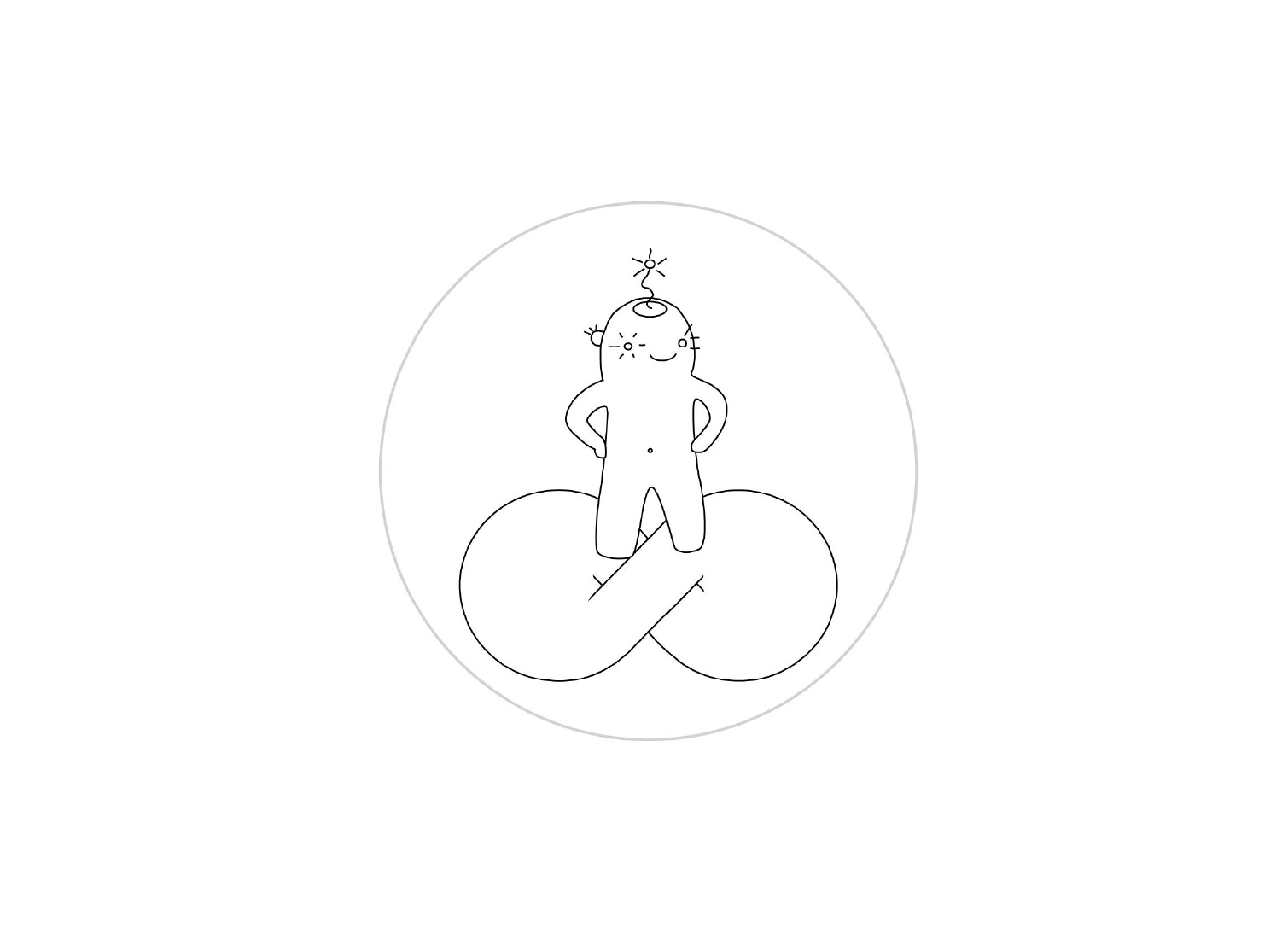
In the Schematic Chart, my emanated self, RD (Revolutionary Debris), appears alongside other characters. These characters show how my mind and artistic world are structured, and guide viewers to explore my world with enjoyment. Each character goes beyond being a simple symbol and carries the operating principles of the Schematic Medium and hints about forthcoming works. Through this, viewers do not merely appreciate my work but pre-experience another narrative and the possibility of expansion. In the end, this chart is a map that reflects a dimension we do not see in everyday life. Through it I clarify the way I understand and express the world and offer viewers a new visual and philosophical experience. I wish to share not only simple artistic expression but deep thinking and an original perspective.
BYR 99 Prime Elements
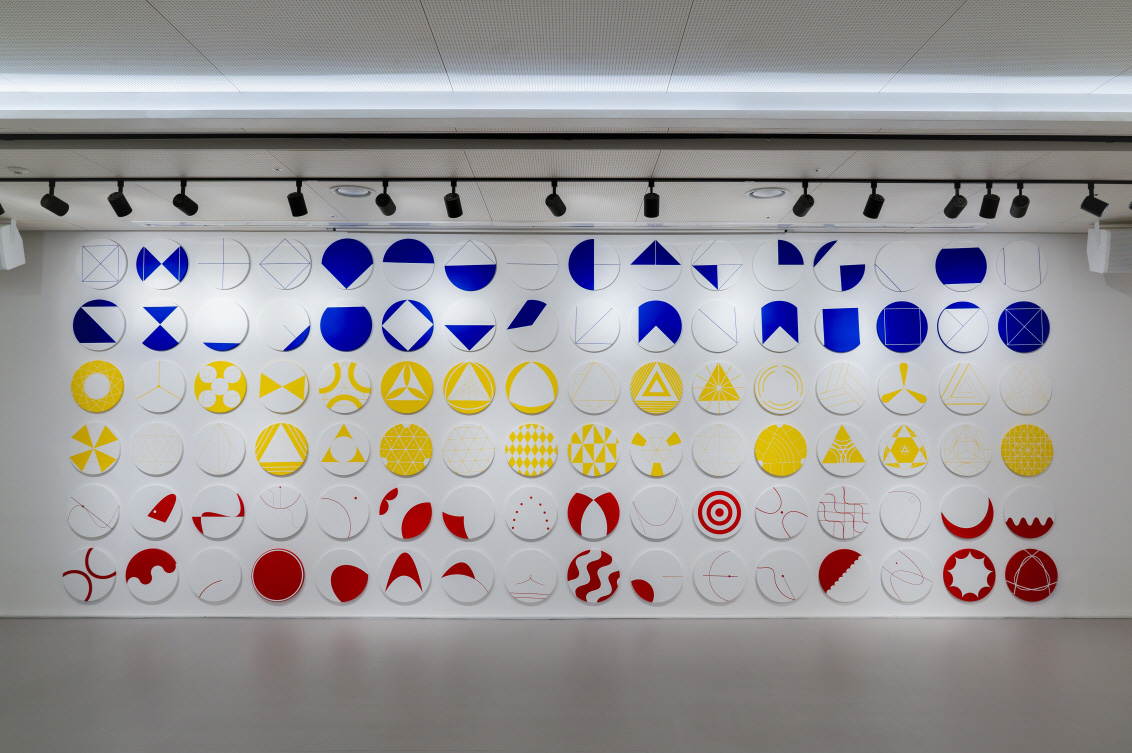
BYR 99 Prime Elements constitutes the most fundamental structural framework of Kim Heejo’s visual language. The series establishes the minimal unit of form through ninety‑nine elements—thirty‑three each of Blue, Yellow, and Red. Each element carries a specific formal code: Blue (square / human), Yellow (triangle / nature), and Red (circle / cosmos), and the relationships among these three elements generate the artist’s visual system.
BYR Organic Schemata
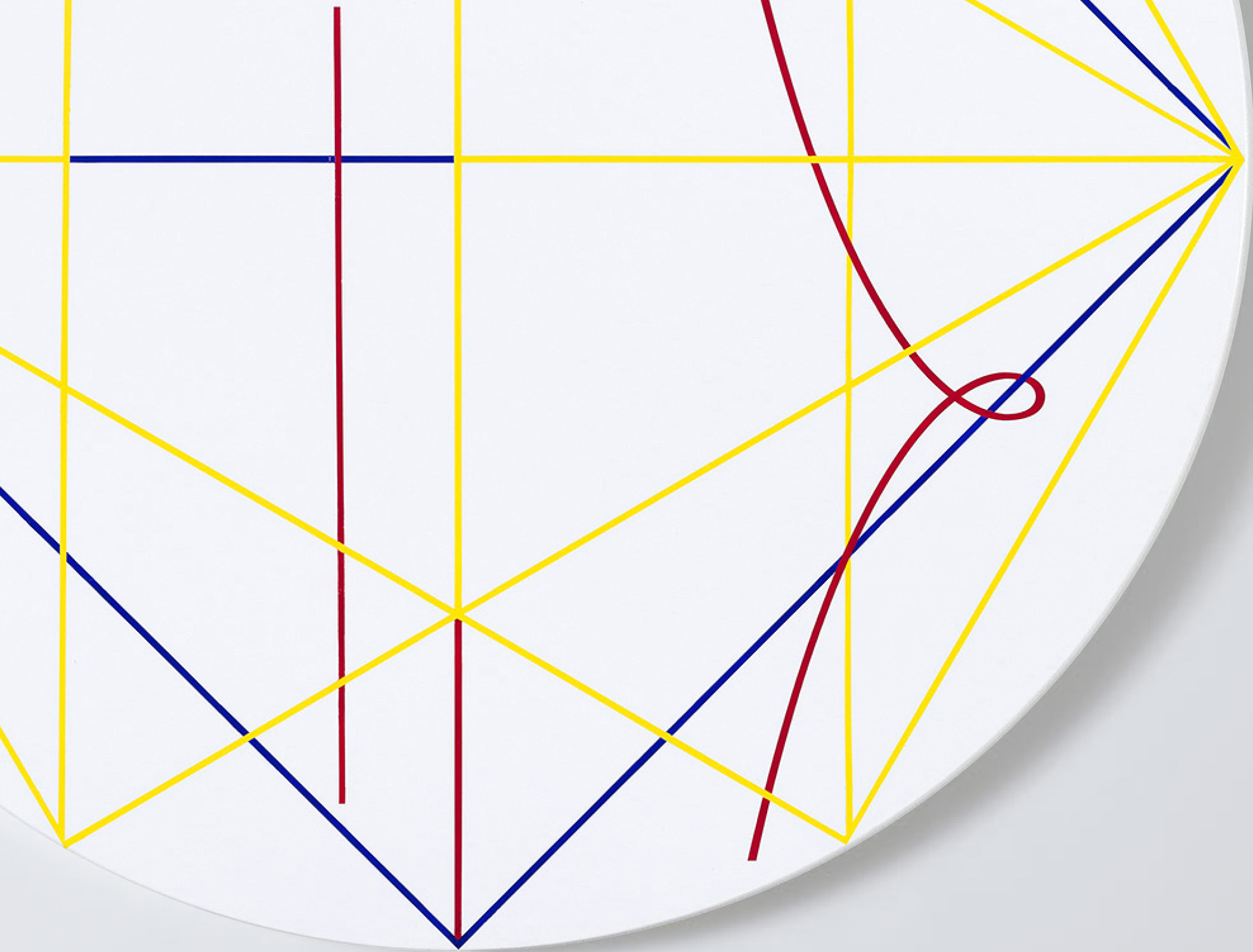
BYR Organic Schemata develops from the structure of BYR Prime Elements and demonstrates the organic expansion of the formal system. Through the combination and variation of the basic elements, new configurations of form and structure emerge. The series moves beyond simple geometric units to explore a more fluid and organic visual order.
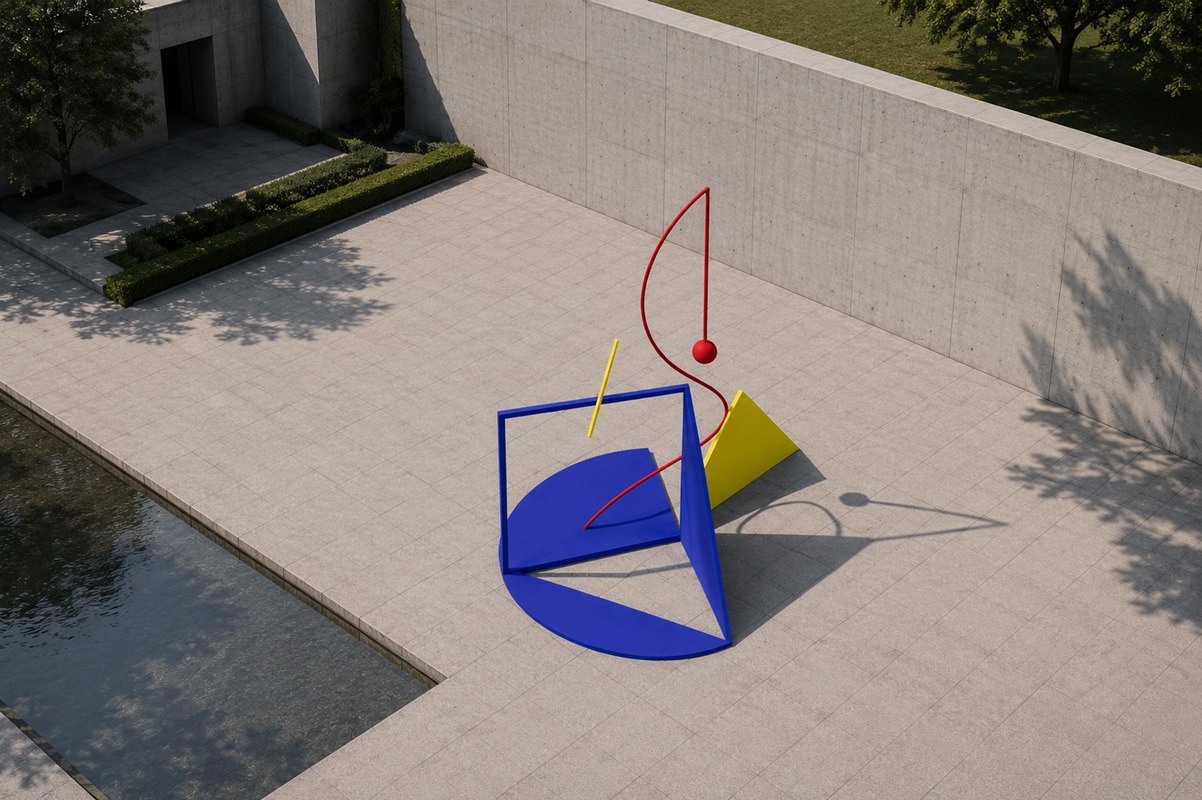
Tri Form Series
The Tri Form Series rearticulates the conceptual structure of BYR Prime Elements as a unified system. Whereas Blue (Gyeok), Yellow (Hyeong), and Red (Gong) were previously presented as independent formative principles, here they are reconfigured to operate simultaneously within a single, integrated structure.
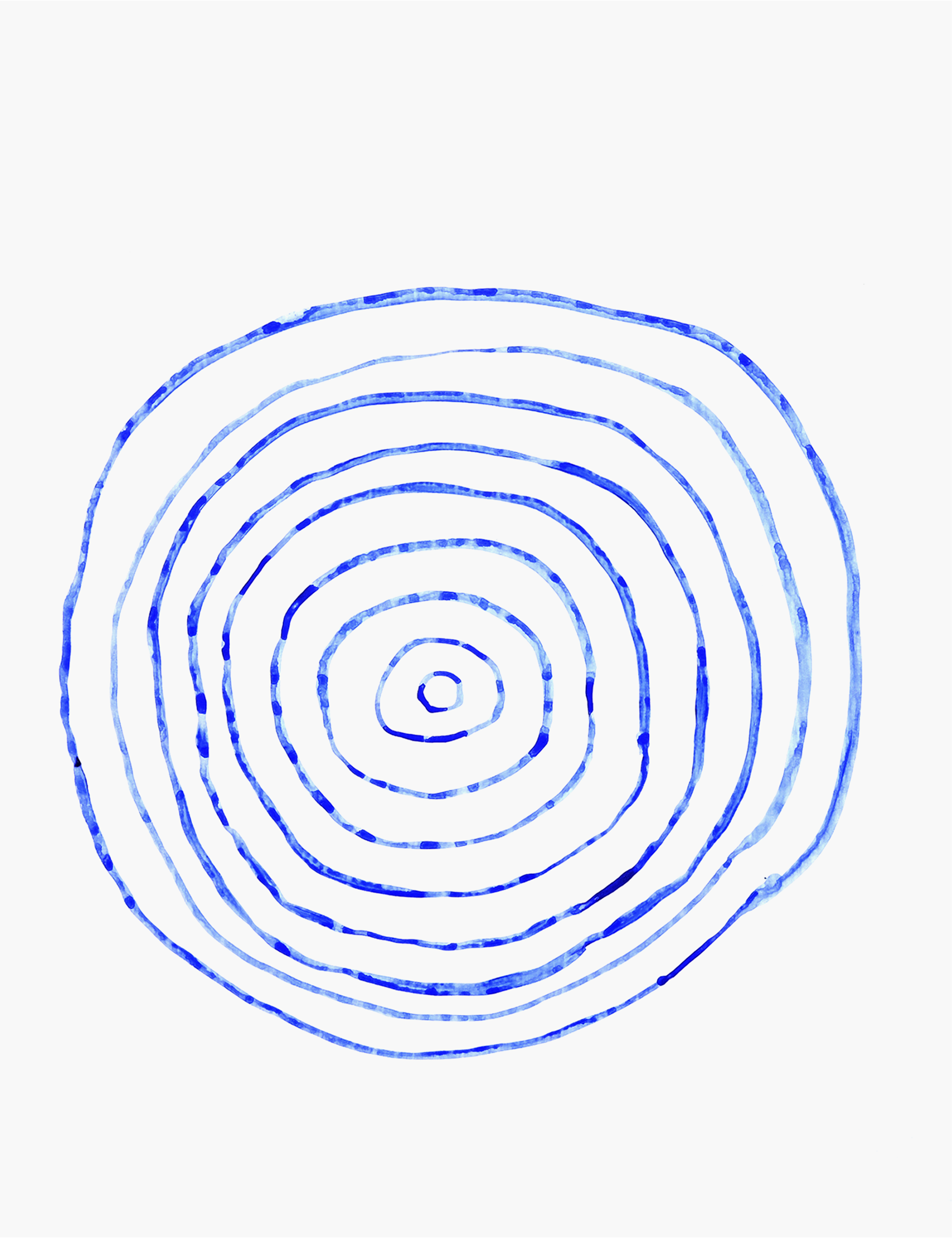
Core Searching series: ‘Semi-Circle & No.9’ Drawing Series
Core-Searching Drawings are early works that investigate the fundamental structure of the artist’s visual language. Through repeated variations of simple forms and signs, the drawings explore the process through which conceptual ideas transform into formal structures. These drawings mark the starting point of a visual system that later expands into painting and object-based works.
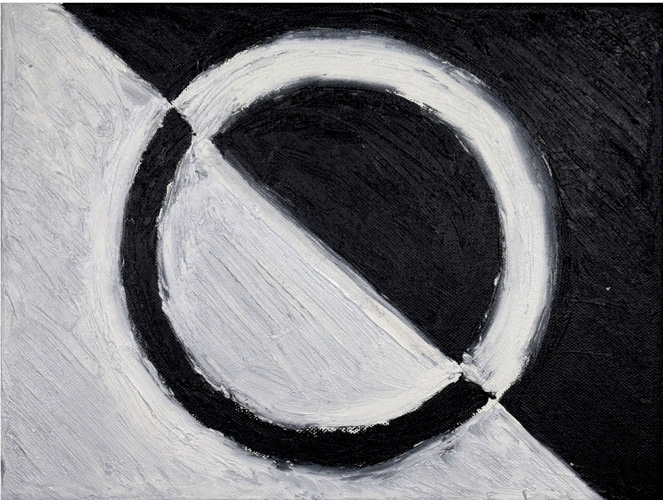
Core Searching series: Core Searching Paintings
Core Searching Paintings is a body of paintings that explores bodily movement and performative process through the fundamental formal language of BYR: the color system of Blue, Yellow, and Red, and the geometric structures of the square, triangle, and circle.
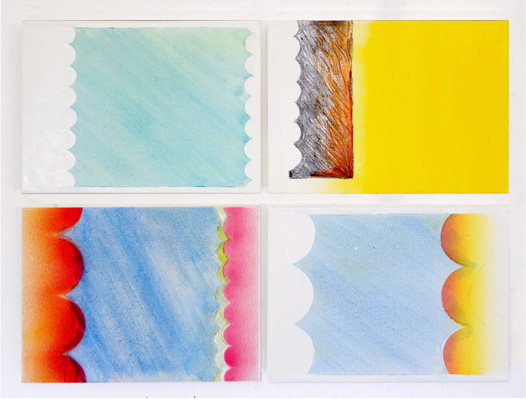
Core Searching series: Color Layered Line Drawing Series
“Color-Layered Line” Drawing Series is a body of work in which colored lines, generated through the movement of the artist’s hand across a measured distance, are layered and accumulated on the surface to form fundamental structures and formal relationships centered on the semicircle.

Schematic Studies: Circle Geometry
Circle Geometry is a digital drawing series developed in advance of actual object production, created to explore a range of geometric structures and formal relationships centered on the circle.