Genetic Clones: Hello! Dolly!
The Dolly Series takes as its motif 'Dolly', the first cloned sheep, and explores the contemporary issue of genetic replication through painting. Rather than treating replication as a matter of representation, the series examines how identical images can be transformed and expanded under varying conditions, shifting the question of replication from one of reproduction to one of structure and relation.
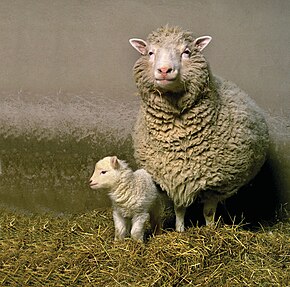
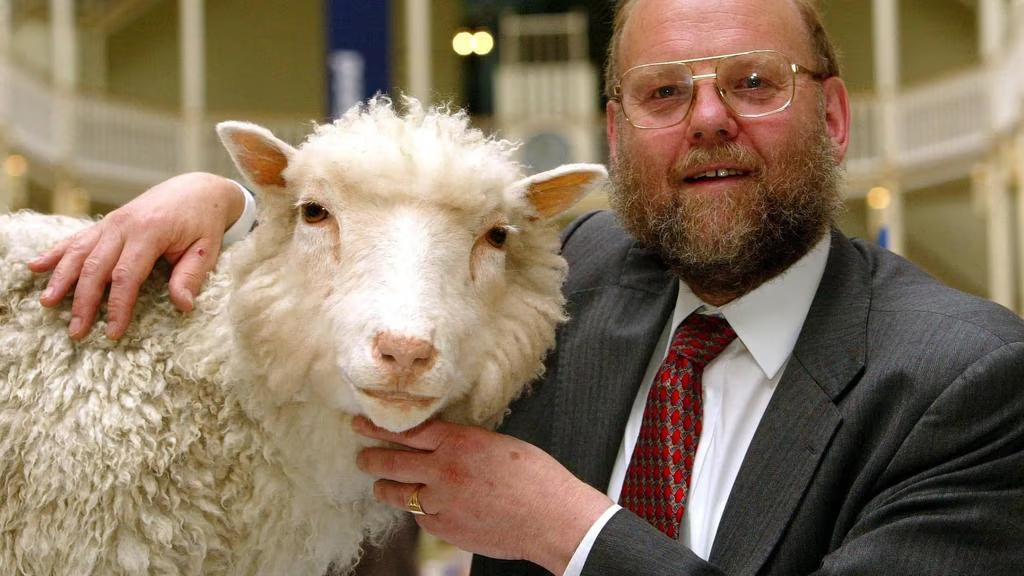
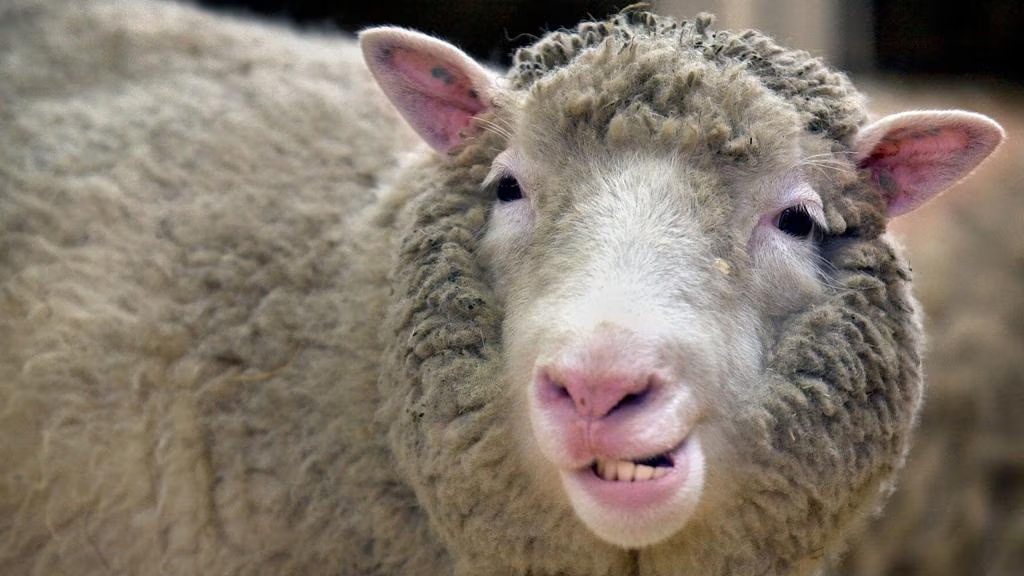
The sheep that appears in the paintings maintains a consistent formal structure, yet manifests in different states through variations in color, composition, and surface treatment. It is not treated as an object of realistic depiction, but reduced to a simplified formal unit. The body and face are constructed through relations of mass and planar form, while descriptive detail is deliberately restrained. This reduction does not aim to explain the subject, but to reveal how form is organized and transformed.
Structure of Repetition and Difference
In this series, repetition does not function as the reproduction of identical images, but as a structure that generates difference.
When a form with the same structural basis is presented as a single image versus when it is arranged in multiplicity, the rhythm of the pictorial field and the perception of space shift fundamentally. Variations in color, positional displacement, and differences in scale subtly differentiate each image, producing individuality within repetition.
Through this condition, the Dolly Series demonstrates how sameness and difference operate simultaneously, allowing a single structure to unfold into multiple outcomes. Replication is thus reinterpreted not as duplication, but as a structural process that transforms and expands according to its conditions.
Tension Between Surface and Structure
In certain works, the sheep appears wrapped or covered. While the external form is maintained, the interior is not directly revealed. This surface treatment generates a tension that simultaneously conceals the substance of the subject and emphasizes its outward form. As visible form and concealed structure are juxtaposed, the image is perceived not simply as representation, but as a condition defined by the relationship between surface and structure. In this sense, painting operates as a field that organizes the tension between the visible and the invisible, exterior and interior, surface and structure.
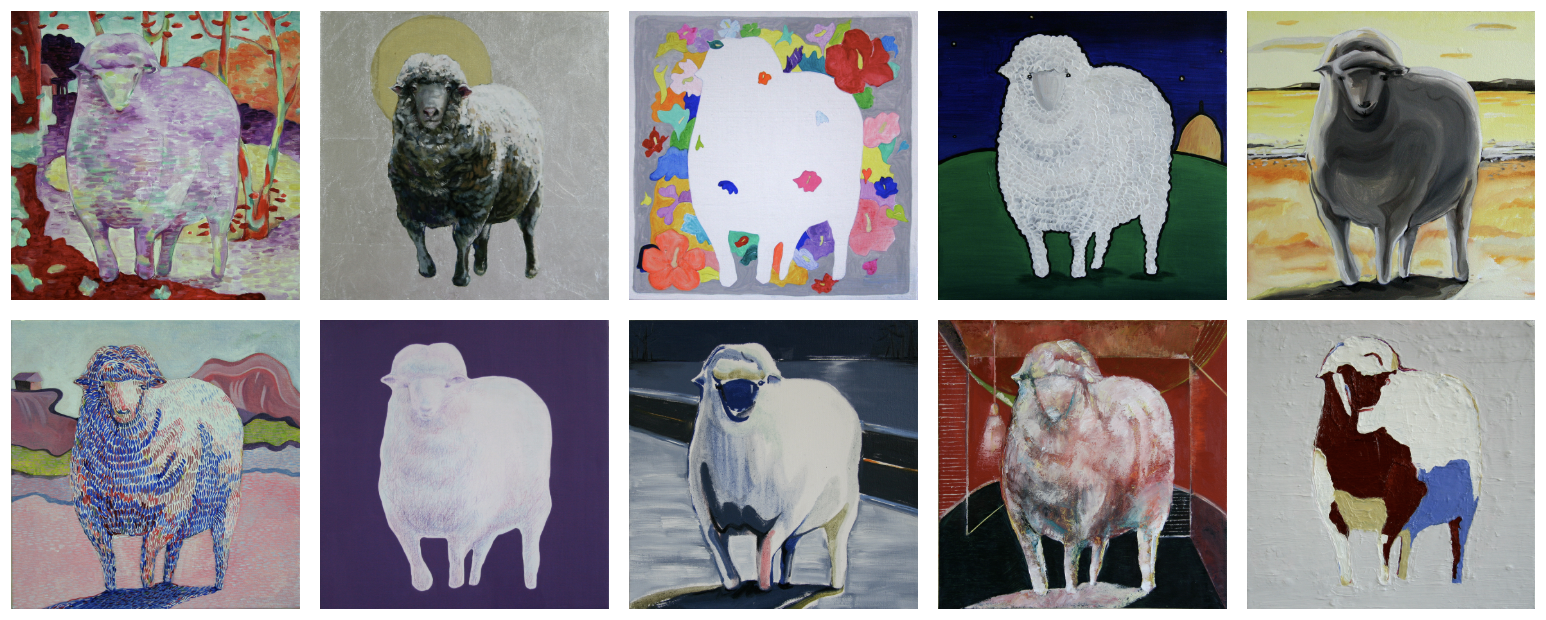 Genetic Clones: Hello! Dolly! Series, 2004-2011
Reconfiguration of Art Historical Methods
The Dolly Series does not approach replication merely as a thematic concern, but reconstructs it painterly through the integration of diverse formal languages developed within art history.
The reduction of form to its structural basis recalls the constructive approach of Paul Cézanne, while the serial repetition of identical imagery resonates with strategies associated with Andy Warhol. The act of wrapping the figure produces a visual effect comparable to the work of Christo and Jeanne-Claude, and the use of strong chromatic contrasts alongside simplified forms evokes the color sensibility of André Derain.
These elements are not cited individually, but are integrated within a single pictorial field, forming a system through which replicated images are painterly transformed and reconfigured.
A Painterly Reinterpretation of Replication
The repeated sheep in this series is not a simple depiction of an identical subject, but a device through which the concept of replication is visually transformed.
Position as an Early Body of Work
Although this series precedes the full conceptual articulation of the Schematic Medium, it already reveals the core principles of the artist’s practice.
. . .
Rather than repeating identical images, the series investigates how a single structure can be transformed and expanded under varying conditions. Through this process, the image is no longer presented as a fixed object, but as a structure that is continuously reconfigured through relations and conditions.
In this sense, the Dolly Series proposes that replication is not the reproduction of identical images, but a plastic system that reveals the process through which structure is transformed and extended.

What is 'Schematic Medium'?
‘Schematic Medium’ is the core methodology penetrating my artistic world. It is a structure of thinking that does not seek to reproduce the essence of the world, but rather to model how the world operates. This term is defined on two levels

Schematic Chart
The left sector of the chart contains a deep exploration into how I dissect and perceive the source of life and existence. Core concepts like 'Origin', 'Universe', 'Nature', and 'Chaos' are interwoven with the physical dimensions of 'Time' and 'Space.' This reveals that I perceive the world not as a mere phenomenon, but by deconstructing it into fundamental forces and orders. Crucially, the Holon philosophy offers an integrated perspective, showing that every entity is both 'the whole and the part', forming the core pillar of my ontological thought. This sector is the solid foundation of my artistic contemplation and the very manner in which I perceive the cosmos and the self.

Featured Characters
In the Schematic Chart, my emanated self, RD (Revolutionary Debris), appears alongside other characters. These characters show how my mind and artistic world are structured, and guide viewers to explore my world with enjoyment. Each character goes beyond being a simple symbol and carries the operating principles of the Schematic Medium and hints about forthcoming works. Through this, viewers do not merely appreciate my work but pre-experience another narrative and the possibility of expansion. In the end, this chart is a map that reflects a dimension we do not see in everyday life. Through it I clarify the way I understand and express the world and offer viewers a new visual and philosophical experience. I wish to share not only simple artistic expression but deep thinking and an original perspective.
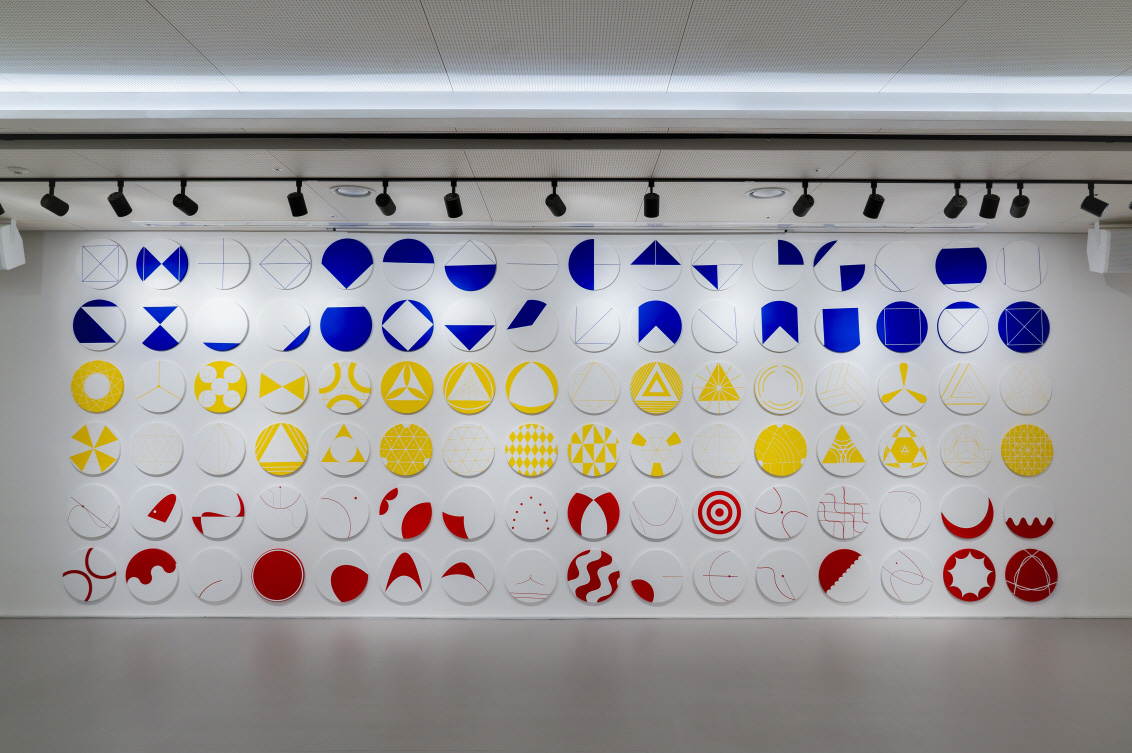
BYR 99 Prime Elements
BYR 99 Prime Elements constitutes the most fundamental structural framework of Kim Heejo’s visual language. The series establishes the minimal unit of form through ninety‑nine elements—thirty‑three each of Blue, Yellow, and Red. Each element carries a specific formal code: Blue (square / human), Yellow (triangle / nature), and Red (circle / cosmos), and the relationships among these three elements generate the artist’s visual system.
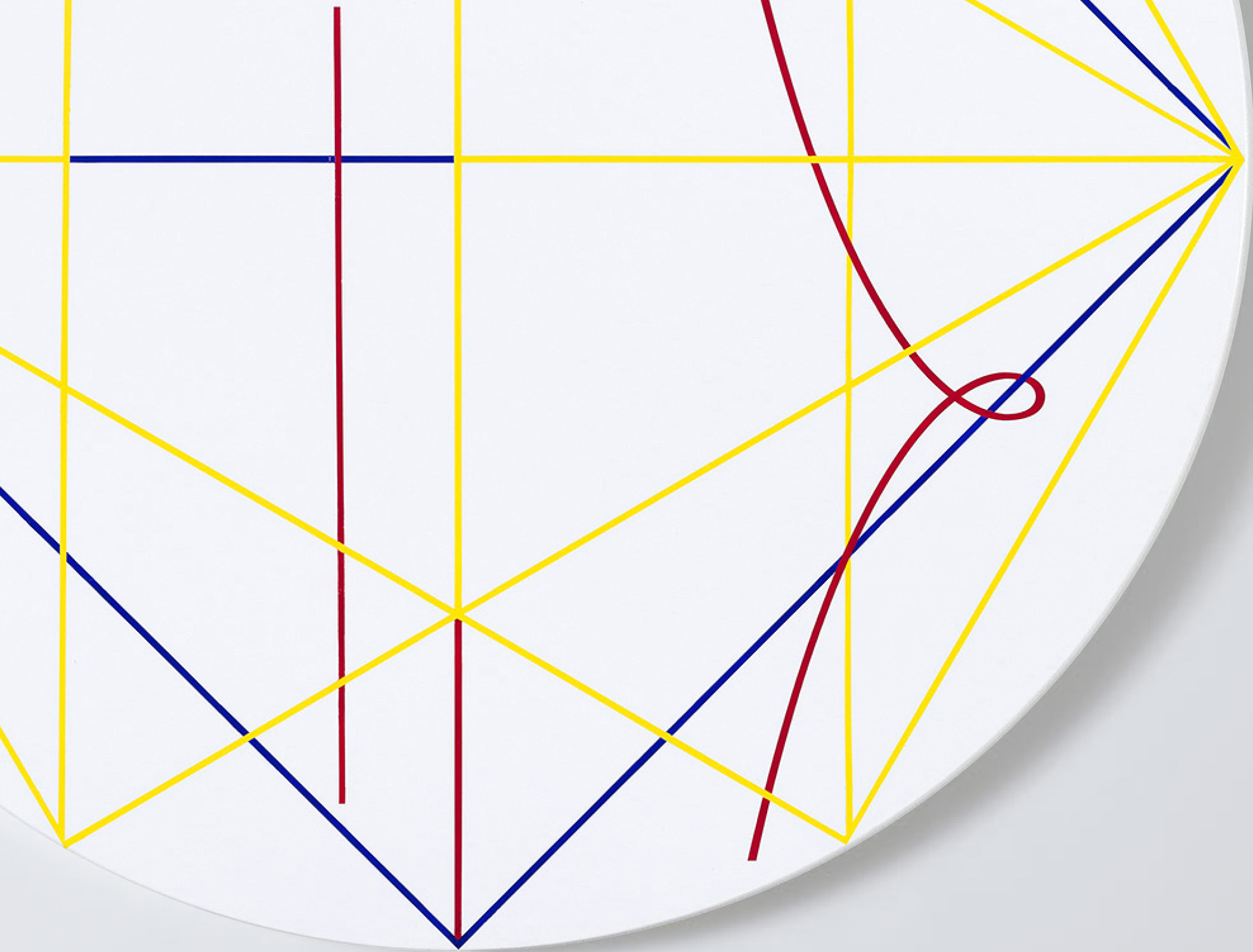
BYR Organic Schemata
BYR Organic Schemata develops from the structure of BYR Prime Elements and demonstrates the organic expansion of the formal system. Through the combination and variation of the basic elements, new configurations of form and structure emerge. The series moves beyond simple geometric units to explore a more fluid and organic visual order.
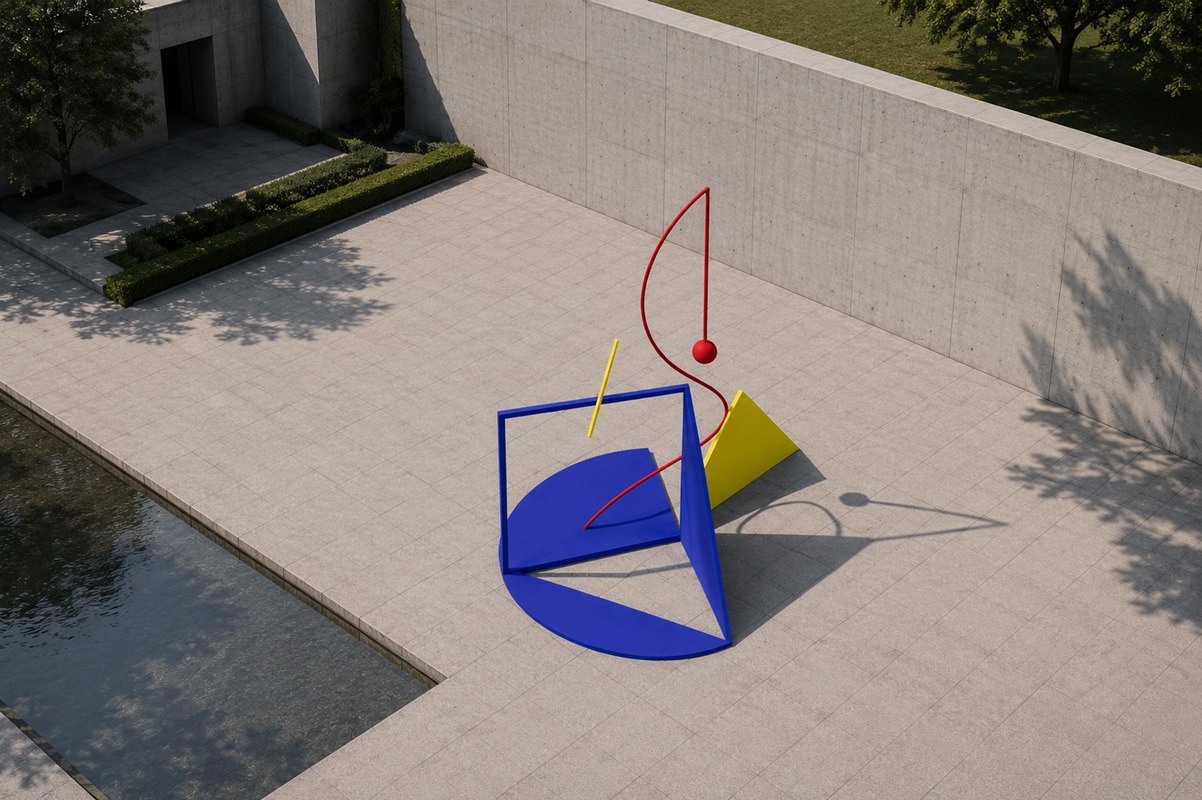
Tri Form Series
The Tri Form Series rearticulates the conceptual structure of BYR Prime Elements as a unified system. Whereas Blue (Gyeok), Yellow (Hyeong), and Red (Gong) were previously presented as independent formative principles, here they are reconfigured to operate simultaneously within a single, integrated structure.
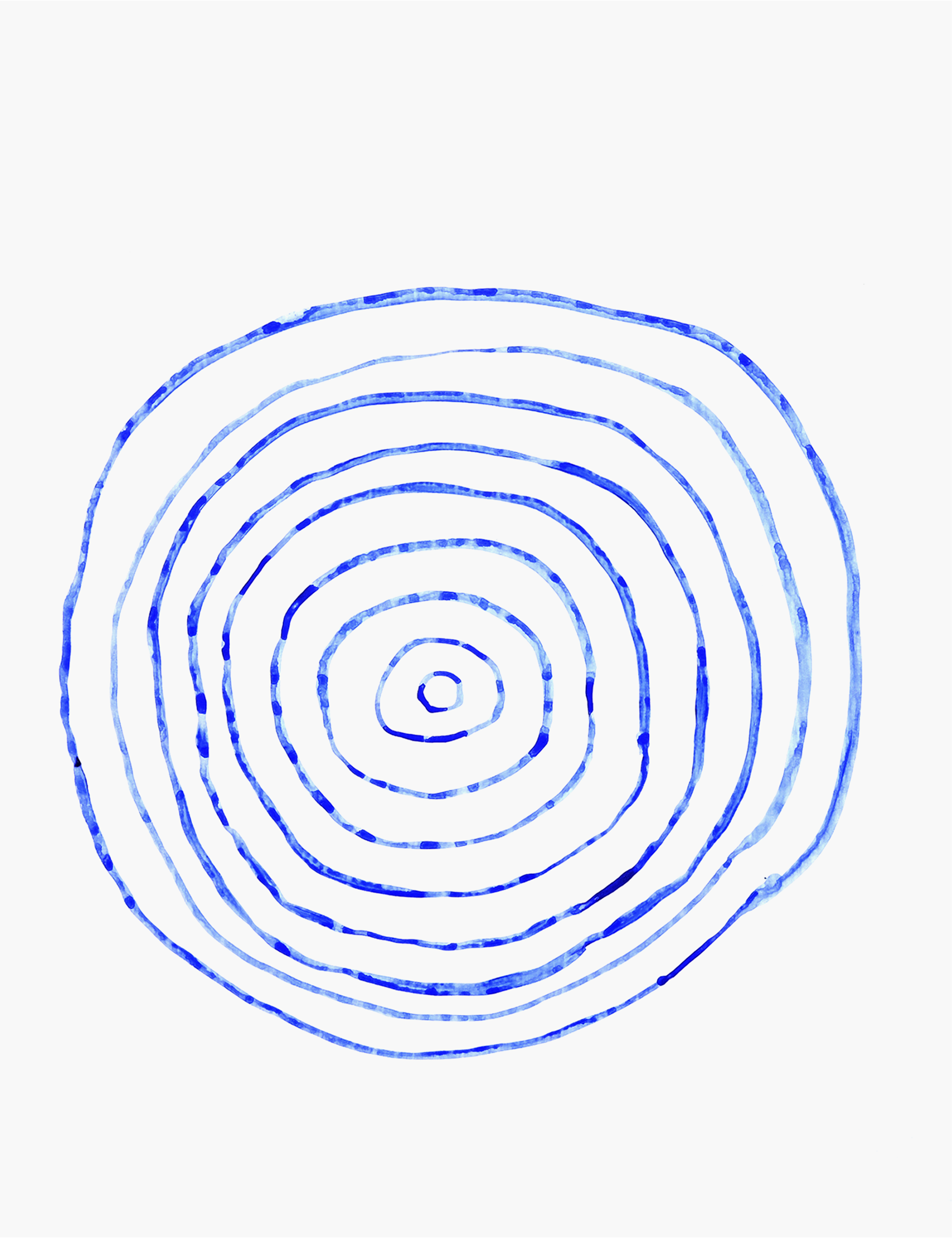
Core Searching series: ‘Semi-Circle & No.9’ Drawing Series
Core-Searching Drawings are early works that investigate the fundamental structure of the artist’s visual language. Through repeated variations of simple forms and signs, the drawings explore the process through which conceptual ideas transform into formal structures. These drawings mark the starting point of a visual system that later expands into painting and object-based works.
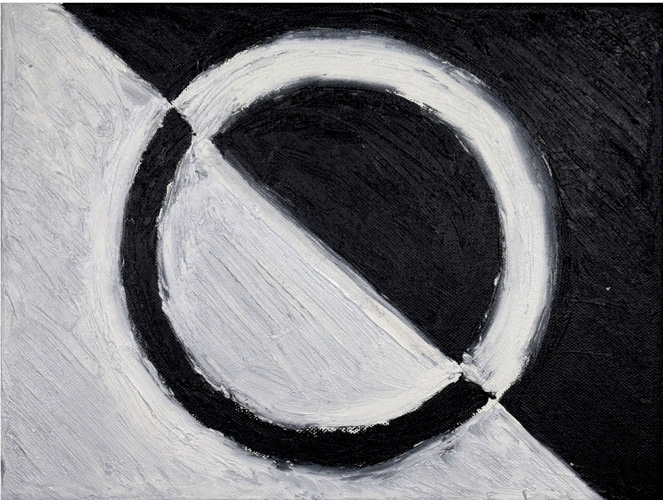
Core Searching series: Core Searching Paintings
Core Searching Paintings is a body of paintings that explores bodily movement and performative process through the fundamental formal language of BYR: the color system of Blue, Yellow, and Red, and the geometric structures of the square, triangle, and circle.
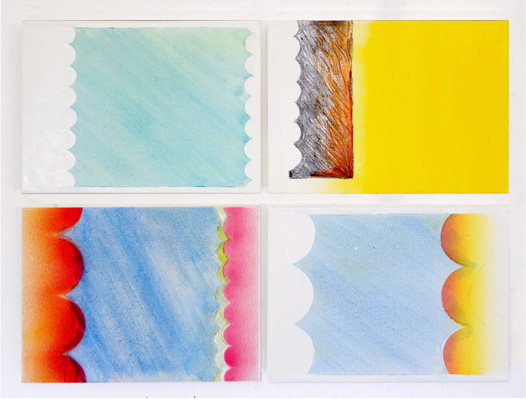
Core Searching series: Color Layered Line Drawing Series
“Color-Layered Line” Drawing Series is a body of work in which colored lines, generated through the movement of the artist’s hand across a measured distance, are layered and accumulated on the surface to form fundamental structures and formal relationships centered on the semicircle.

Schematic Studies: Circle Geometry
Circle Geometry is a digital drawing series developed in advance of actual object production, created to explore a range of geometric structures and formal relationships centered on the circle.