What is 'Schematic Medium'?
'Schematic Medium' is a coherent system in which form and concept are structurally organized and unfold through the continuous reconfiguration of schemas. It is not defined by a fixed form or medium, but by the way in which works are organized and expanded through schemas generated by specific themes and formal conditions.
The term “Schematic” derives from “schema,” which conventionally refers to a diagram or chart. In this context, however, it signifies a structure of thought—an underlying cognitive framework through which perception is organized and experience is structured. Within the work, this notion is extended into a generative principle that connects formal elements and establishes order. A schema does not function as a static template, but as a structural logic that organizes relationships and enables the formation of a coherent system.
“Medium”, in this framework, does not refer to material or genre. Rather, it designates a condition in which form, structure, and modes of development operate together. Painting, drawing, sculpture, object, and installation are therefore understood not as independent disciplines, but as different conditions through which a schema is realized.
'Schematic Medium' is thus distinct from a system in which a single central principle is continuously transformed or extended. Instead, multiple schemas are generated in response to different themes and formal conditions, and each body of work is organized around its corresponding schema. Each schema unfolds as a distinct series, and the overall body of work constitutes a multi-schema system in which these series coexist and develop in parallel.
Each schema maintains its own internal coherence while simultaneously forming relationships within the larger body of work. The work as a whole is therefore not understood as a linear progression or transformation of a single structure, but as a complex field in which multiple structures are generated, coexist, and intersect.
This condition is also evident at the level of form. In works that adopt an abstract mode, emphasis is placed on the relationships and structural organization among formal elements. In works that take on a figurative mode, the subject itself functions as a thematic center, generating a corresponding schema. In both cases, form is not fixed as either abstract or figurative, but is selected and modulated according to the conditions of the schema, functioning as a means through which structure is realized.
'Schematic Medium' can therefore be understood not as the extension of a singular formal language, but as a system in which schemas are continuously generated and reconfigured in relation to specific themes. Each work operates not as an isolated outcome, but as a phase in which a particular schema becomes manifest. The overall body of work is constituted through the accumulation and interrelation of these phases.
Operational Principles
This system is articulated through three interrelated principles:
Structuring of Concepts (Formation of Schema)
A given theme is organized into a structural order, within which individual elements form interdependent relationships. The schema functions as the central structure that organizes the concept, and the work unfolds in accordance with this structure. A work is thus not a collection of parts, but a structural field in which the formation and operation of a concept become visible.
Mode of Structural Realization (Conditions of Form and Medium)
Each schema is accompanied by specific forms and techniques through which the structure is maintained. Form does not operate as a fixed style, but as the mode through which the schema is realized. The same schema may appear differently under varying material and spatial conditions, and medium functions not as an autonomous category, but as the condition through which structure is actualized.
Mode of Structural Development (Continuous Reconfiguration)
Each work is not a repetition of previous works, but a reconfiguration of the same schema under new conditions. This process does not proceed toward a single direction or resolution, but unfolds across multiple trajectories as schemas are continuously reorganized. Through this, the body of work forms not a singular progression, but a system in which multiple structures coexist and evolve through their ongoing reconfiguration.
. . .
Schematic Medium does not separate individual works from the overall body of work. Each work functions as a phase in which a particular schema becomes manifest, while the entire body of work is constituted through the accumulation and interrelation of these phases.

Schematic Studies: Schematic Objects Study from Circle Geometry
Schematic Objects Study from Circle Geometry is a body of work that extends the circle-centered geometric structures and formal relationships explored in Circle Geometry into actual objects, examining how planar schemata may be transformed into spatial form.

Schematic Studies: Schematic Painting Study from Core Searching Drawings
Schematic Painting Study from Core Searching Drawings is a body of work that extends the semicircle-based formal structures explored in the earlier Core Searching Drawings into the field of painting. Reconstructing the basic forms developed through drawing within a painterly surface, this series combines color, light, and variable visual perception in order to generate a new sensory order. It is therefore not simply a translation of drawing into painting, but a pictorial

Schematic Platform no.1
Schematic Platform no.1 is an installation work that presents the overall concept of Schematic Medium by organizing drawings, paintings, objects, and structural elements into a single integrated spatial formation. Rather than displaying individual genres side by side as separate categories, this work brings together the different formal languages developed over time and activates them as one unified work.

Pattern Studies
Pattern Studies is a body of work centered on pattern as one of the formal elements of Schematic Medium, exploring how repetition, arrangement, color, and rhythm generate structure within the picture plane. In this series, pattern does not function as a merely decorative device or surface repetition, but as a key formal principle through which visual order and sensory rhythm are constructed.
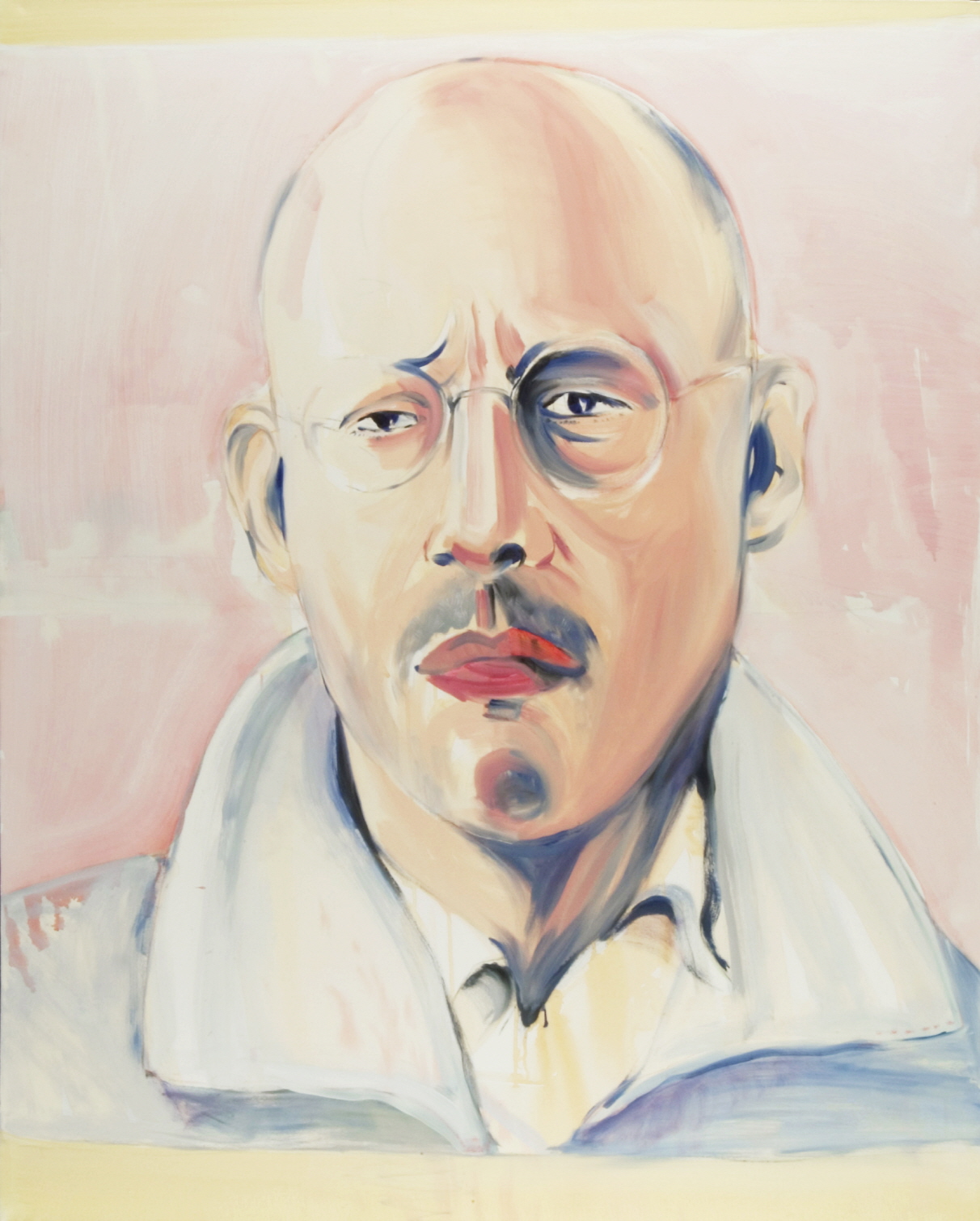
Face Series
The Face series is a body of paintings centered on the human face. Moving beyond conventional portraiture, the works explore emotional and psychological traces of human presence through color, brushstroke, composition, and expression. Each painting articulates the individuality and atmosphere of its subject through painterly means.

Genetic Clones: Hello! Dolly!
The sheep that appear on the surface maintain a consistent formal structure, yet emerge in different states through variations in color, composition, and surface treatment. Here, the figure of the sheep is treated not as an object of realistic representation, but as something reduced to a simplified unit of form. The body and face are constructed through the relationship between concise masses and planes, while descriptive detail is deliberately restrained. This reduction does not aim to explain the subject concretely, but to reveal how form itself is organized and transformed.