BYR Quad Origin - kim heejo

BYR Quad Origin

A Generative Structure within the Schematic Medium


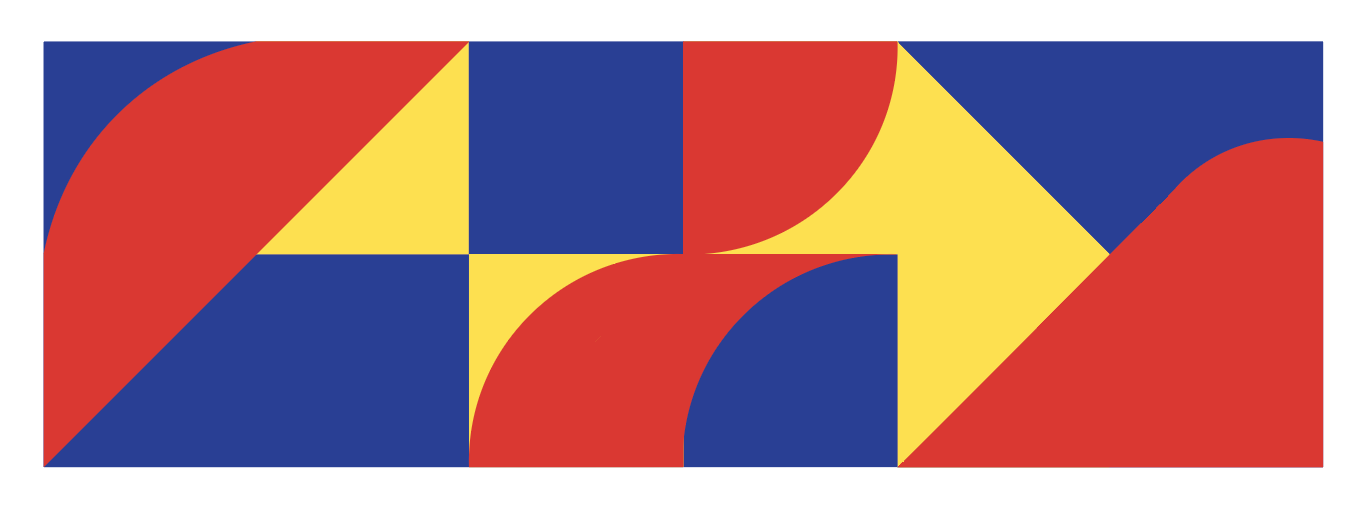
BYR Quad Origin (QUAD) is a body of work that condenses the structural principles proposed in BYR Prime Elements into their most concentrated form, in order to investigate the fundamental conditions through which a plastic language comes into being.


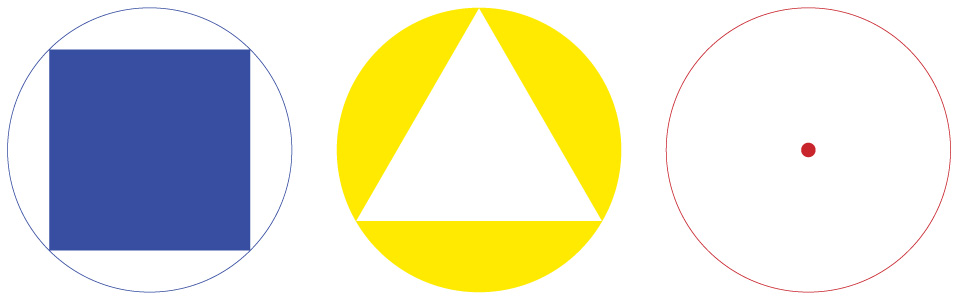
BYR 99 Prime Elements: 'B01, Y01, R01'

In this series, Blue (square/human), Yellow (equilateral triangle/nature), and Red (circle/universe) are no longer presented as discrete symbols. Instead, they are reconstituted as primary units that interact within a single structure. QUAD functions as a field in which the generative conditions required for these three elements to enter into relation and activate a structure are made visible. It can therefore be understood not as a mere reduction, but as a work that presents the foundational structure through which the larger BYR system becomes possible.


Conditions for the Emergence of Form
Reduction as a Means of Generating Structure
QUAD unfolds in a direction distinct from the simplification of essence pursued by modernist reductionism. If the reduction of form to point, line, and plane once approached a final language for explaining the world, reduction here does not function to terminate structure, but to establish the conditions through which new relations may emerge.
The three elements of BYR do not operate as fixed archetypes, but as minimal units through which structure can be formed. QUAD reveals the primary level at which these minimal units first combine and enter into relation. In this sense, QUAD is not a miniature version of the BYR system as a whole, but something closer to the logical ground that makes that system possible.


QUAD: The Structural Frame of Human Cognition
The Square as a Finite Frame
The square, which constitutes the formal basis of QUAD, is not merely a geometric figure, but a frame that reveals the structural conditions under which human cognition operates. It suggests a mode of perception that remains open to an infinite world, yet is ultimately compelled to think and organize order within finite structures.
The Finite Frame: Structural Dynamics of Perception 
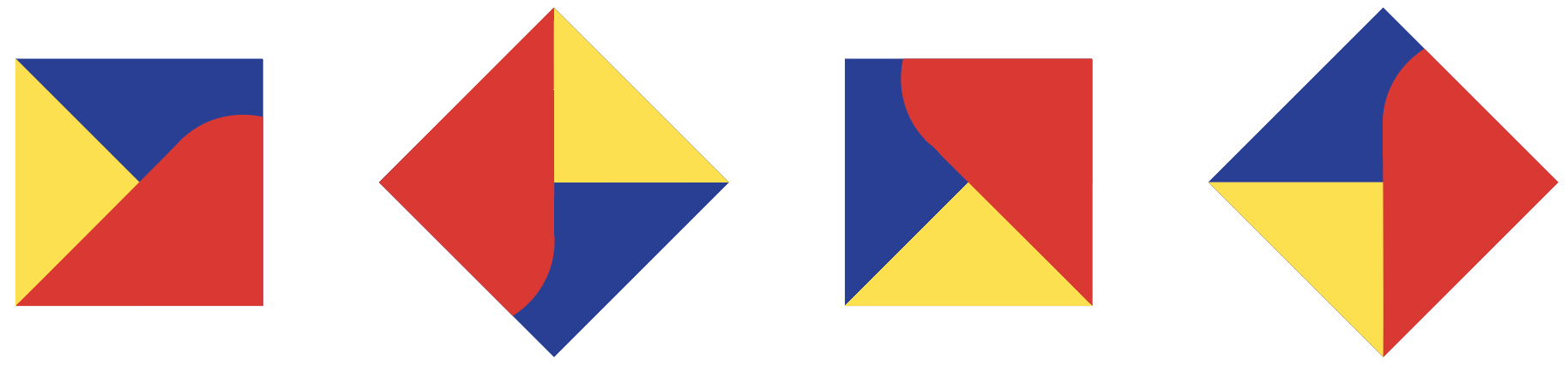
The square may thus be understood simultaneously as a form of stability and order, and as the limited frame through which cognition becomes operative. At times, its rotation into a diamond shape introduces tension and dynamism into this structure, making visible subtle imbalances and shifts arising within an otherwise stable order. QUAD thereby appears as a structure that sustains internal dynamism within a bounded form.


Origin: The Point at Which Relation Emerges
The Present Condition That Activates Structure
Origin does not signify a historical beginning or a singular point of departure. Rather, it refers to the structural condition that arises each time the three elements enter into relation with one another. Blue, Yellow, and Red are not self-sufficient elements completed in isolation; they acquire meaning only through their interrelation. Origin functions precisely as the interface at which that relation becomes possible.
Within the limited frame of the square, the three elements establish tensions and balances that reveal a structural relation. This tension is not merely one of chromatic contrast or formal opposition, but a structural state produced through the process by which each element defines and conditions the others. Origin marks the point at which this state is formed—the site where, within a finite form, the possibility of relation and expansion is opened.


Modular Structure and Expandability
From Unit to System
QUAD does not remain only as a single independent work, but also functions as a module. Each square possesses its own self-contained structure, while also implying the possibility of expansion into a larger system through its arrangement and combination with other modules.
 
 
From Unit to System: Modular Scalability.  BYR Quad Origin #6, #8, #4

In this sense, the work partially shares the simplicity and modularity associated with minimalism, yet its aim is not the minimization of form in itself. Rather, by reducing formal elements to a minimum, the operating principles of structure and the formation of relations are revealed with greater clarity.
Through rotation, arrangement, and combination, the modules generate new structures, demonstrating the process through which a system is continuously composed and recalibrated.
 
 
. . .


The Generative Structure of the Schematic Medium
BYR Quad Origin is a work that most concisely reveals the generative structure that makes the BYR system as a whole possible. While presupposing the finite frame of human cognition, the series shows how structure may be constituted and expanded through the conditions under which relations among elements are formed within that frame.
In this sense, QUAD is less a work that presents a completed form than a structural field that investigates the conditions under which form emerges and becomes operative. BYR Quad Origin may therefore be understood as a key phase of the Schematic Medium, one that foregrounds not form itself, but the formation of relations, the emergence of structure, and the possibility of expansion unfolding within limited conditions.


Schematic Studies: Circle Geometry


Circle Geometry is a digital drawing series developed in advance of actual object production, created to explore a range of geometric structures and formal relationships centered on the circle.

Schematic Studies: Schematic Objects Study from Circle Geometry


Schematic Objects Study from Circle Geometry is a body of work that extends the circle-centered geometric structures and formal relationships explored in Circle Geometry into actual objects, examining how planar schemata may be transformed into spatial form.

Schematic Studies: Schematic Painting Study from Core Searching Drawings


Schematic Painting Study from Core Searching Drawings is a body of work that extends the semicircle-based formal structures explored in the earlier Core Searching Drawings into the field of painting. Reconstructing the basic forms developed through drawing within a painterly surface, this series combines color, light, and variable visual perception in order to generate a new sensory order. It is therefore not simply a translation of drawing into painting, but a pictorial

Schematic Platform no.1


Schematic Platform no.1 is an installation work that presents the overall concept of Schematic Medium by organizing drawings, paintings, objects, and structural elements into a single integrated spatial formation. Rather than displaying individual genres side by side as separate categories, this work brings together the different formal languages developed over time and activates them as one unified work.

Pattern Studies


Pattern Studies is a body of work centered on pattern as one of the formal elements of Schematic Medium, exploring how repetition, arrangement, color, and rhythm generate structure within the picture plane. In this series, pattern does not function as a merely decorative device or surface repetition, but as a key formal principle through which visual order and sensory rhythm are constructed.
Face Series


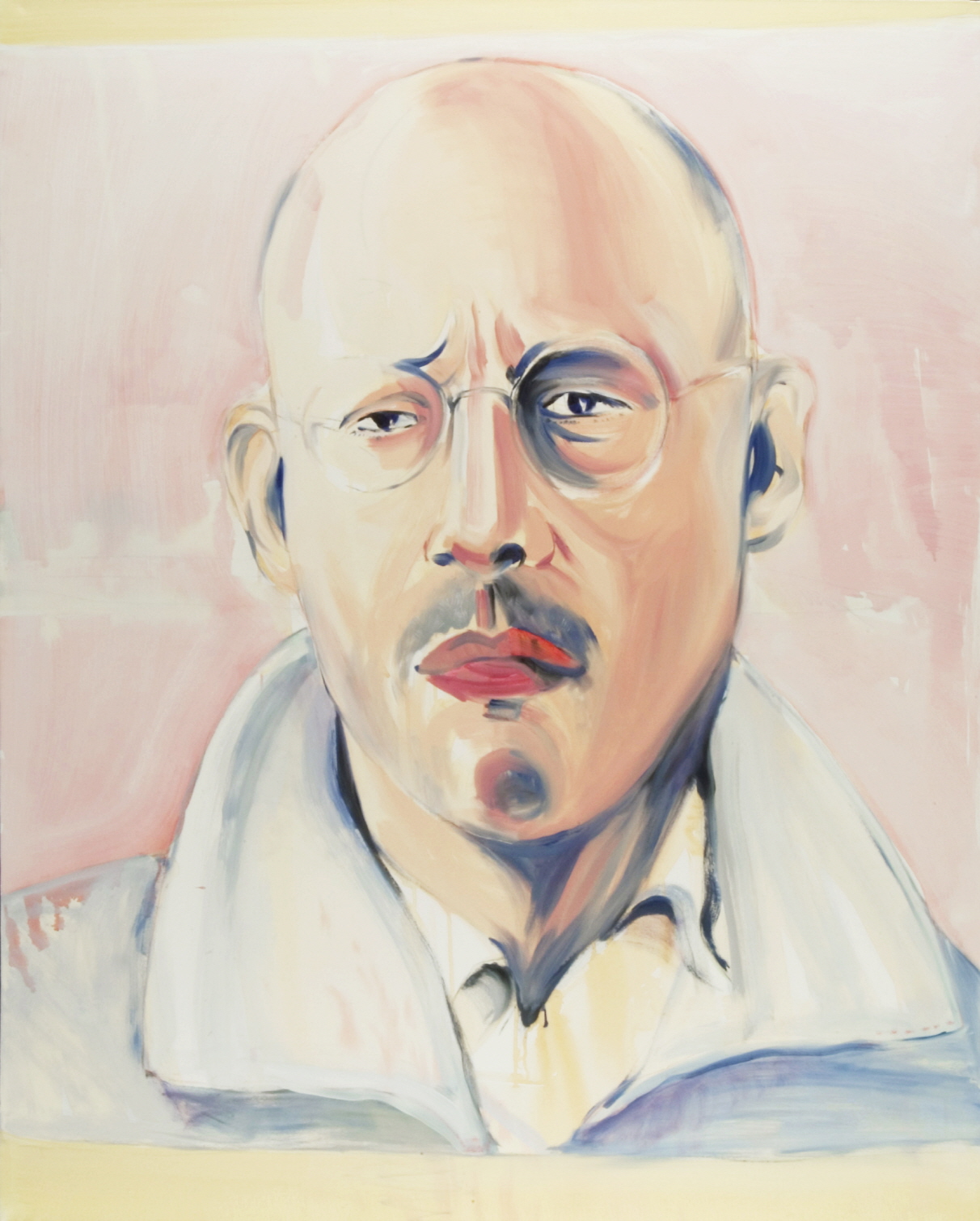
The Face series is a body of paintings centered on the human face. Moving beyond conventional portraiture, the works explore emotional and psychological traces of human presence through color, brushstroke, composition, and expression. Each painting articulates the individuality and atmosphere of its subject through painterly means.

Genetic Clones: Hello! Dolly!


The sheep that appear on the surface maintain a consistent formal structure, yet emerge in different states through variations in color, composition, and surface treatment. Here, the figure of the sheep is treated not as an object of realistic representation, but as something reduced to a simplified unit of form. The body and face are constructed through the relationship between concise masses and planes, while descriptive detail is deliberately restrained. This reduction does not aim to explain the subject concretely, but to reveal how form itself is organized and transformed.