Schematic Studies: Circle Geometry
A Digital Drawing Series Exploring the Structural Possibilities of Objects through the Combination and Transformation of Circular Geometry
Circle Geometry is a digital drawing series developed in advance of actual object production, created to explore a range of geometric structures and formal relationships centered on the circle. Rather than presenting fully realized three-dimensional objects, these works function as a process of testing and organizing formal possibilities that may later be translated into object-based forms. The series may therefore be understood both as an independent body of two-dimensional works and as a set of structural drawings that lay the groundwork for future spatial realization.
At the core of the series is the circle. As one of the most fundamental and self-contained geometric forms, the circle does not remain here as a fixed symbol of completeness. Instead, it is divided, cut, overlapped, and combined with lines, planes, angles, curves, and asymmetrical elements, becoming the point of departure for a wide range of formal variations. As a result, the circle is presented not as a singular and stable figure, but as a fluid structure continually reconfigured through its relationships with other forms.
Each drawing in Circle Geometry operates less as a finished image than as an experiment in how geometric elements may be combined, tensioned, and transformed to generate new configurations. Circles, semicircles, straight lines, triangles, rectangles, arcs, and cut edges appear as independent forms, yet they are ultimately defined through their relationships with one another. Some intervene within the circle and divide its internal order; others disrupt its outer contour; still others partially dismantle or extend the logic of circular geometry. In this way, the series suggests that the essence of form lies not in any single geometric figure, but in the relations, tensions, and arrangements established among multiple forms.
The fact that this series takes the form of digital drawing is also significant. The digital environment allows for a more precise adjustment of line placement, proportion, division, color arrangement, spacing, and formal balance, while also making it possible to compare and vary a given structure in multiple ways. Circle Geometry is therefore less a drawing based on immediate manual gesture than a conceptual drawing grounded in the analysis and testing of formal combinations and structural possibilities. In this sense, the series emphasizes formal thinking and structural experimentation rather than spontaneous expression.
Although these works exist on a flat surface, their purpose does not lie solely in planar completion. Each drawing contains the possibility of later transformation into an object, and the forms presented in the image are structured with an awareness of their potential spatial extension. In other words, these are not simply visual diagrams, but preparatory works that test how planar formal elements may transition into spatial construction. Circle Geometry thus occupies an intermediate position between surface and object, serving as a means of prefiguring, organizing, and refining form before its translation into three-dimensional structure.
Color also functions in a clearly structural way within the series. Blue, red, green, pink, purple, and related hues are used not for emotional expression, but as visual devices that distinguish formal relationships and clarify structural differences. Color highlights certain figures, defines areas of overlap and division, and reveals both the independence and interconnectedness of the various elements. It therefore serves not as decoration, but as a means of articulating order and making formal relationships legible.
What matters in this series is not the search for a single ideal solution, but the exploration of how fundamental geometric elements can be transformed and combined in multiple ways. At times the circle remains as the most stable and complete form; at other times it appears as a cut segment, or is reconfigured through its combination with entirely different geometric structures. In this sense, Circle Geometry is an ongoing investigation into the expanded possibilities of circular form, accumulating a structural vocabulary that may later develop into actual object-based works.
Ultimately, Circle Geometry is a digital drawing series produced in preparation for future object works, exploring the structural possibilities of objects through the combination and transformation of various geometric elements centered on the circle. Rather than presenting completed forms, the series visualizes a process of formal thought and structural experimentation, showing how forms that begin on a flat surface may later expand into spatial construction. It may therefore be understood not as a mere preliminary sketch, but as an independent field of inquiry in which the possibilities of form are analyzed, organized, and tested in advance of material realization.

Schematic Studies: Schematic Objects Study from Circle Geometry
Schematic Objects Study from Circle Geometry is a body of work that extends the circle-centered geometric structures and formal relationships explored in Circle Geometry into actual objects, examining how planar schemata may be transformed into spatial form.

Schematic Studies: Schematic Painting Study from Core Searching Drawings
Schematic Painting Study from Core Searching Drawings is a body of work that extends the semicircle-based formal structures explored in the earlier Core Searching Drawings into the field of painting. Reconstructing the basic forms developed through drawing within a painterly surface, this series combines color, light, and variable visual perception in order to generate a new sensory order. It is therefore not simply a translation of drawing into painting, but a pictorial

Schematic Platform no.1
Schematic Platform no.1 is an installation work that presents the overall concept of Schematic Medium by organizing drawings, paintings, objects, and structural elements into a single integrated spatial formation. Rather than displaying individual genres side by side as separate categories, this work brings together the different formal languages developed over time and activates them as one unified work.

Pattern Studies
Pattern Studies is a body of work centered on pattern as one of the formal elements of Schematic Medium, exploring how repetition, arrangement, color, and rhythm generate structure within the picture plane. In this series, pattern does not function as a merely decorative device or surface repetition, but as a key formal principle through which visual order and sensory rhythm are constructed.
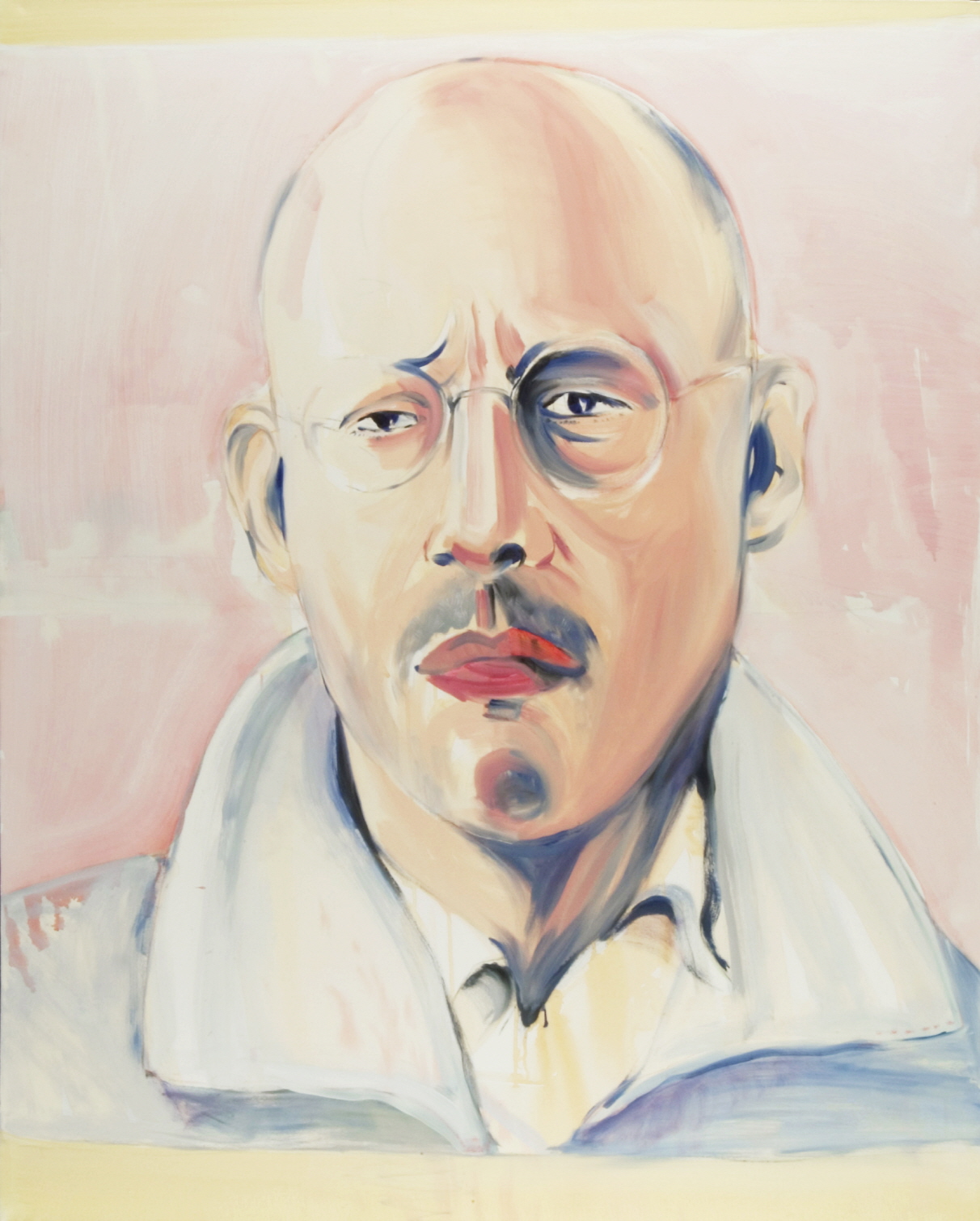
Face Series
The Face series is a body of paintings centered on the human face. Moving beyond conventional portraiture, the works explore emotional and psychological traces of human presence through color, brushstroke, composition, and expression. Each painting articulates the individuality and atmosphere of its subject through painterly means.

Genetic Clones: Hello! Dolly!
The sheep that appear on the surface maintain a consistent formal structure, yet emerge in different states through variations in color, composition, and surface treatment. Here, the figure of the sheep is treated not as an object of realistic representation, but as something reduced to a simplified unit of form. The body and face are constructed through the relationship between concise masses and planes, while descriptive detail is deliberately restrained. This reduction does not aim to explain the subject concretely, but to reveal how form itself is organized and transformed.