Schematic Platform no.1 - kim heejo

Schematic Platform no.1


Shifted Topo-logical Thinking with a Distorted Artistic Mind, 2018


Schematic Platform no.1 is an installation work that presents the overall concept of Schematic Medium by organizing drawings, paintings, objects, and structural elements into a single integrated spatial formation. Rather than displaying individual genres side by side as separate categories, this work brings together the different formal languages developed over time and activates them as one unified work. Installed in the 2018 exhibition Shifted Topo-logical Thinking with a Distorted Artistic Mind, it can be understood both as part of the exhibition and as an independent total work in itself.
 
What is central to this work is not the distinction between media, but the transition and integration among them. Drawing no longer remains as line on a flat surface, but extends into spatial structure. Painting exists as color fields and panels on the wall, yet also functions as a rhythm and division within the installation as a whole. Objects do not remain isolated as autonomous sculptural units, but become part of a larger system through their relation of distance, direction, height, and placement to the surrounding elements. In this sense, Schematic Platform no.1 is not simply a site where multiple genres coexist, but a structural platform in which different formal elements are integrated into a single language.
 
As the title suggests, this installation operates as a platform. Here, “platform” does not mean a literal base or display device, but a formal field in which line and plane, color and structure, surface and space, object and installation are brought into relation. Each element appears independently, yet at the same time refers to, tensions, and reorganizes the others in order to produce an overall formal order. The work is therefore both a gathering of individual elements and a unified structure that exceeds them.
 
As visible in the installation, Schematic Platform no.1 organizes space through the simultaneous use of semicircular structures, vertical color bands, linear elements, planar panels, protruding components, and the relationship between wall and floor. Recurrent semicircular forms continue to function as important formal units, while pink stripes, blue planes, black curves, green linear structures, projecting wooden elements, and areas of empty space appear as distinct forms but together generate tension and rhythm within the installation as a whole. In this context, space does not function as a neutral background, but as an active compositional condition through which forms enter into relation and acquire meaning.
 
The work also moves fluidly across the boundaries between plane and volume, wall and floor, surface and structure. Some elements are attached to the wall like paintings yet project into real space; others possess the physical presence of objects while still appearing as extensions of drawing; still others are reduced to minimal line-like structures that nevertheless determine the orientation and flow of the entire space. In this way, Schematic Platform no.1 does not preserve the boundaries between genres as separate entities, but demonstrates how different formal languages may pass continuously into one another within a single spatial condition.
 
The use of materials is equally important to the work. Smooth painted panels, drawn lines, wooden structures, object-like components, and relatively raw material elements are placed together within the same system without a rigid hierarchy. Material here is not simply a means of execution, but a formal unit that produces differences of density, tactility, direction, and presence. Differences in material generate differences in form, and differences in form produce spatial tension and rhythm. Material therefore functions not merely at the level of physical substance, but as an active element in organizing the overall structure of the work.
 
Above all, the importance of this installation lies in the fact that it makes visible the concept of Schematic Medium in its most comprehensive form. Problems that had appeared separately in earlier works—repetition, structure, the semicircle, line, color field, objecthood, and spatiality—are gathered here into one integrated language. Schematic Platform no.1 does not simply present the finished result of a specific medium; rather, it forms a site in which the formal principles and modes of thought that have moved across multiple media are realized simultaneously within one place. In this respect, it is not merely an installation arrangement, but a total work that spatially embodies Schematic Medium itself.
 
The work also refuses a single fixed viewpoint. It requires the viewer to move through the space, to shift distance, and to repeatedly negotiate between part and whole. A given element may initially appear as an independent work, but from another position it becomes legible as only one fragment of the larger structure. This experience transforms the installation from a collection of static things into a relational structure that is perceived and completed through movement.


Schematic Studies: Circle Geometry


Circle Geometry is a digital drawing series developed in advance of actual object production, created to explore a range of geometric structures and formal relationships centered on the circle.

Schematic Studies: Schematic Objects Study from Circle Geometry


Schematic Objects Study from Circle Geometry is a body of work that extends the circle-centered geometric structures and formal relationships explored in Circle Geometry into actual objects, examining how planar schemata may be transformed into spatial form.

Schematic Studies: Schematic Painting Study from Core Searching Drawings


Schematic Painting Study from Core Searching Drawings is a body of work that extends the semicircle-based formal structures explored in the earlier Core Searching Drawings into the field of painting. Reconstructing the basic forms developed through drawing within a painterly surface, this series combines color, light, and variable visual perception in order to generate a new sensory order. It is therefore not simply a translation of drawing into painting, but a pictorial

Schematic Platform no.1


Schematic Platform no.1 is an installation work that presents the overall concept of Schematic Medium by organizing drawings, paintings, objects, and structural elements into a single integrated spatial formation. Rather than displaying individual genres side by side as separate categories, this work brings together the different formal languages developed over time and activates them as one unified work.

Pattern Studies


Pattern Studies is a body of work centered on pattern as one of the formal elements of Schematic Medium, exploring how repetition, arrangement, color, and rhythm generate structure within the picture plane. In this series, pattern does not function as a merely decorative device or surface repetition, but as a key formal principle through which visual order and sensory rhythm are constructed.
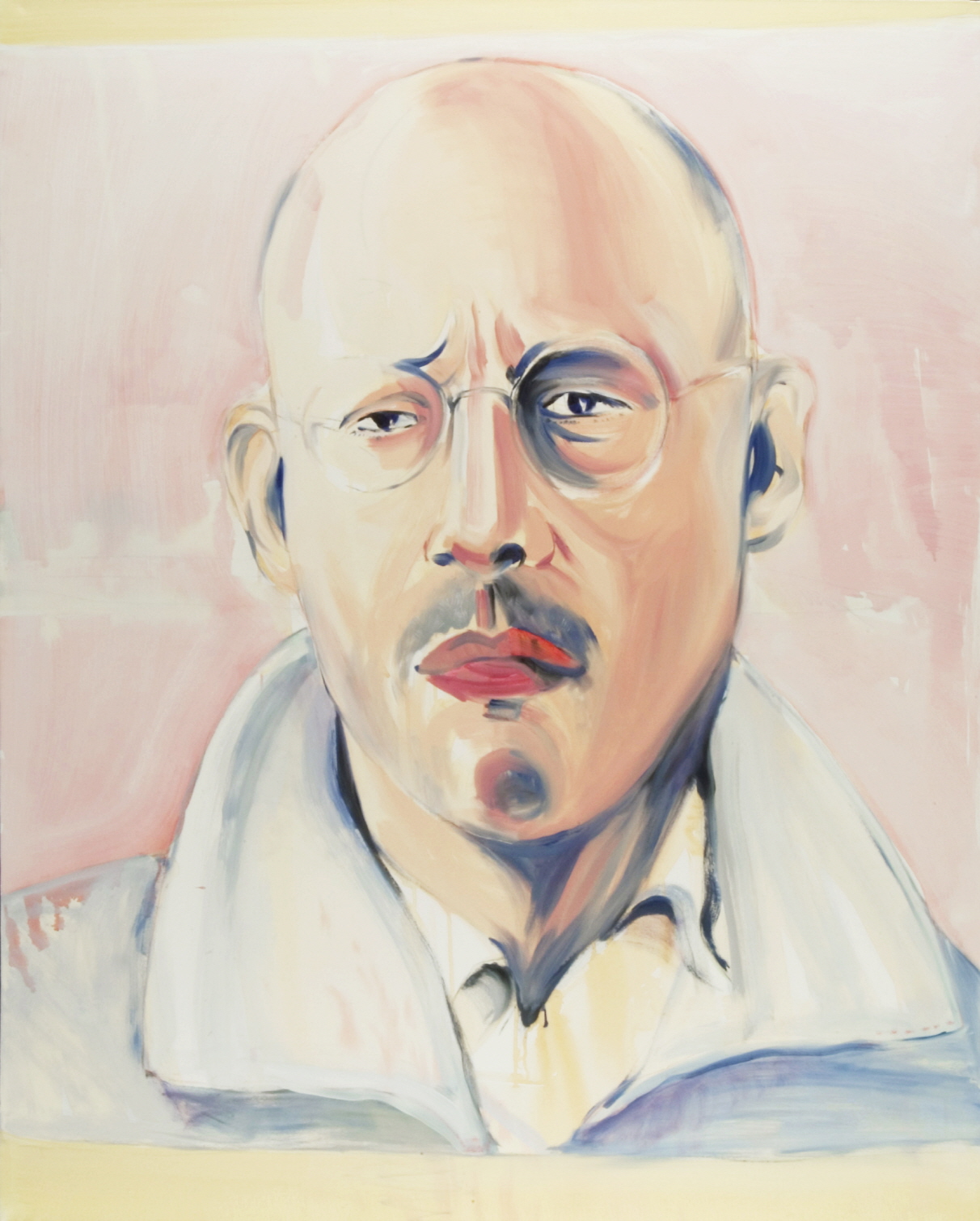
Face Series


The Face series is a body of paintings centered on the human face. Moving beyond conventional portraiture, the works explore emotional and psychological traces of human presence through color, brushstroke, composition, and expression. Each painting articulates the individuality and atmosphere of its subject through painterly means.

Genetic Clones: Hello! Dolly!


The sheep that appear on the surface maintain a consistent formal structure, yet emerge in different states through variations in color, composition, and surface treatment. Here, the figure of the sheep is treated not as an object of realistic representation, but as something reduced to a simplified unit of form. The body and face are constructed through the relationship between concise masses and planes, while descriptive detail is deliberately restrained. This reduction does not aim to explain the subject concretely, but to reveal how form itself is organized and transformed.